Treat the missing lift as a booking decision
The first-floor venue explicitly lacks a lift and ramp. Resolve mobility and stroller needs before buying a timed ticket, because the admission purchase cannot remove that physical barrier.
The Museum of Illusions in Connaught Place turns perspective, mirrors and visual cues into an hour of family experiments and playful photographs.
Official-linked live ticket categories verified; operator and ticket partner differ on weekend closing time. Base prices exclude GST on the operator page, and final checkout controls the payable total.
1 photo · Subeesh Balan സുഭീഷ് ബാലൻ · CC BY-SA 3.0 · Photos are representative and may not show current conditions. Context photograph — Jantar Mantar New Delhi. Archival photograph; current access and conditions may differ. Neighbourhood context, not a photograph of Museum of Illusions - Connaught Place.. Credits →
Desk research, not a site visit. Re-check the official notice on the morning you travel.
The Museum of Illusions in Connaught Place turns perspective, mirrors and visual cues into an hour of family experiments and playful photographs. Children can appear larger than parents, see repeated versions of themselves and discover that a convincing image is not always an accurate account of space. It is a timed, first-floor attraction with no lift or ramp, not an all-day science centre.
Children need an accompanying adult’s supervision. Sensory effects can be disorienting; skip any room a child dislikes. The first-floor venue explicitly has no lift or ramp and is not wheelchair accessible.
The best value comes when adults join the visual puzzles and help children understand the effects, rather than only taking photographs for them.
The first-floor venue explicitly lacks a lift and ramp. Resolve mobility and stroller needs before buying a timed ticket, because the admission purchase cannot remove that physical barrier.
A child who helps position the camera can see how perspective creates the effect. The family learns more when everyone investigates the setup instead of repeating a pose.
Agree that nobody has to enter a room that feels uncomfortable. Choosing static illusions can keep the session enjoyable without making the Vortex Tunnel a test of courage.
The museum’s central idea is that our brains use clues to interpret what we see, and those clues can be manipulated. Let a child first describe the effect in their own words. Then change where they stand or where the camera looks and compare the result. This creates a small investigation rather than a sequence of unexplained photo poses. A family can enjoy the surprise while also asking what made the image convincing. No special science knowledge is required, but adults participating alongside children can make the explanations much more memorable.
The operator lists the Beuchet Chair among its installations, with an effect that can make a child appear to outgrow an adult. Follow staff instructions about where participants and the photographer should stand. After taking the picture, inspect the arrangement from another angle if permitted. Ask why the photograph seems to join parts of a scene that are separated in space. It is a useful way to discuss perspective and the limits of a single viewpoint. The fun comes from comparing the convincing image with the actual arrangement, not simply keeping the final photo.
The Cloning Table and Head on a Platter are also named operator installations. One plays with repeated appearances; the other creates a comic impression that a head is separated from its body. Prepare a younger child who might find the title alarming: it is a staged optical effect, not a dangerous act. Let family members swap the participant and photographer roles. Children often notice more when they see how a picture is composed as well as appearing in it. Follow the designated positions rather than moving or dismantling exhibit elements to investigate.
The operator advertises a Vortex Tunnel alongside Tilted and Reversed rooms. These experiences use visual surroundings to challenge normal expectations about orientation and balance. Some children find that exciting; others may prefer to watch or skip. Agree before entering that leaving an uncomfortable exhibit is an acceptable choice, and follow the staff’s instructions and any handrail guidance. A visit can still offer plenty through static installations and images. Do not describe every effect as suitable for every person simply because the general admission policy welcomes all ages.
The image collection includes holograms whose appearance changes with viewpoint. Instead of hurrying past, move as directed and describe what appears or disappears. Ask whether the object itself changed or whether the available view changed. This provides a quieter contrast with the immersive rooms and can suit a child who does not enjoy balance effects. Give the labels time: the museum’s educational value depends partly on understanding the visual mechanism, not only on recording a surprising picture. Exhibit availability can vary, so use the current floor offering rather than a rigid checklist.
The official-linked booking page shows ₹590 for adults 12+, ₹550 for children 3–11, ₹500 for seniors 60+ and ₹850 for the foreign adult/child category. The operator’s tariff page states 18% GST additional. That gives ₹696.20 for an adult base ticket and ₹649 for a child base ticket after GST; two such adults and one child total ₹2,041.40 before any further checkout fee. This is arithmetic from the published tariff, not a promise of the final dated charge. The calendar’s ₹500 display is a starting category, not the price for every visitor.
Museum of Illusions Delhi: contact, tariffs and access · Official-linked ticket partner: current Delhi booking categories
Published terms limit the visit to one hour and tie tickets to the selected slot. They describe tickets as non-refundable and non-transferable, with a one-time rescheduling route on the operator site; the actual ticket seller’s terms should be checked before payment. The current official link leads to Live Your City, which describes the venue as cashless. Bring age evidence for child or senior categories as the ticket selector requests. Arrive ready for the slot rather than planning to spend the first part of it finding the correct A Block entrance.
Official-linked ticket partner: current Delhi booking categories · Museum of Illusions: booking terms
The venue is on the first floor and explicitly states that neither a lift nor a ramp is available. This is a decisive access fact, not a minor inconvenience to discover after buying tickets. Outside food and drinks are prohibited, and the terms also restrict bags and shopping bags; ask about any essential child-care item before arrival. Plan a toilet and snack break before the session, checking facilities directly if needed. The operator locates the entrance near Rajiv Chowk Exit 8. A short Connaught Place meal afterwards fits the one-hour experience better than assuming the museum supplies a café or full-day care.
Museum of Illusions Delhi: contact, tariffs and access · Museum of Illusions: booking terms
Prices, access and programmes can change. Confirm with the operator before setting out.
A 30–33, first floor, A Block, Inner Circle, Connaught Place, near Rajiv Chowk Metro Exit 8, New Delhi 110001.
Search-based Google map. Confirm the public entrance before travelling; this is not a surveyed entrance pin.
Published booking terms specify one hour. The ticket is for the selected time slot, not unlimited same-day access.
The ticket selector uses ages 3–11; ages 12+ use the adult category. The official-linked partner says children under 3 enter free.
No. ₹500 is the published senior base category. The adult 12+ base is ₹590, with 18% GST additional on the operator tariff page.
For two ₹590 adult bases and one ₹550 child base,18% GST produces ₹2,041.40 before any additional checkout fee. Confirm the dated payable total.
The operator explicitly says there is no lift or ramp, and the ticket partner says the venue is not wheelchair accessible.
No. Treat it as a choice and follow staff guidance. Static images and other installations can still provide an enjoyable visit.
The published terms prohibit bags/shopping bags and outside food or drinks. Confirm arrangements for essential child-care items before travelling.
The operator terms state non-refundable, non-transferable tickets and mention one-time rescheduling. Check the terms of the actual booking channel before paying.
Rajiv Chowk Exit 8, near the A Block Inner Circle address. Verify current station access and allow time to locate the first-floor entrance.
No. It is a compact timed attraction built around optical effects, immersive rooms and photographs, with a published one-hour visit.
Your first-hand tip helps the next family: the best time to go, where the toilets are, what to skip. An editor reads every tip before it appears.
Desk-checked against linked primary sources on 2026-11-01; not a site visit. Ages, durations and suggested activities are editorial advice. Confirm date-specific access, prices and facilities before travel. Last checked 1 November 2026.
Tell us what has changed: new hours, a price, a closed gallery, a changing table that exists or doesn’t. We check against a source before publishing.
Run Museum of Illusions - Connaught Place? Claim this listing to take enquiries and send us updates. It’s free.
Consider one of these if there is time and energy left. They are alternatives; the route link lets you check the journey before adding a stop.
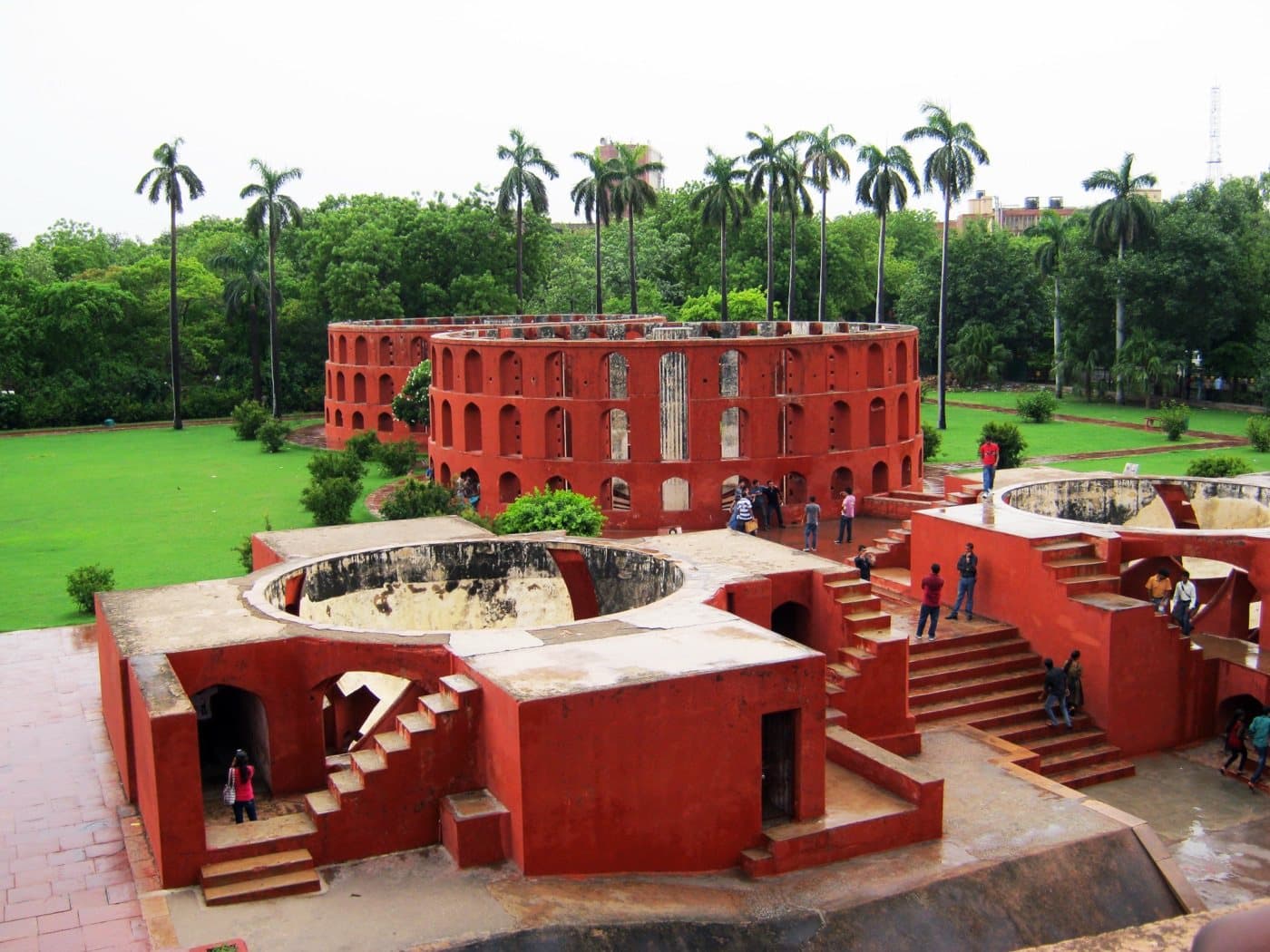
60–90 minutes with a few instrument explanations. · Outdoor
Delhi’s Jantar Mantar is an observatory made of large masonry instruments rather than a telescope dome. Check its own opening and access notes before adding a second stop.
45–75 minutes for a respectful temple visit · Indoor & outdoor
Delhi’s Laxminarayan Temple, commonly called Birla Mandir, is a working Hindu temple on Mandir Marg dedicated to Lakshmi and Narayana. Check its own opening and access notes before adding a second stop.