Settle electronics before the entrance queue
The published restrictions cover mobiles and cameras, not only flash photography. Bring fewer items and confirm storage arrangements so children are not waiting while adults improvise.
Delhi’s Laxminarayan Temple, commonly called Birla Mandir, is a working Hindu temple on Mandir Marg dedicated to Lakshmi and Narayana.
Government tourism provides free entry, split hours and phone/camera restrictions; NMMA corroborates temple identity and architectural history. Exact aarti sessions and current storage arrangements need local confirmation.
1 photo · Subeesh Balan സുഭീഷ് ബാലൻ · CC BY-SA 3.0 · Photos are representative and may not show current conditions. Context photograph — Jantar Mantar New Delhi. Archival photograph; current access and conditions may differ. Neighbourhood context, not a photograph of Laxminarayan Temple (Birla Mandir).. Credits →
Desk research, not a site visit. Re-check the official notice on the morning you travel.
Delhi’s Laxminarayan Temple, commonly called Birla Mandir, is a working Hindu temple on Mandir Marg dedicated to Lakshmi and Narayana. A family visit can combine respectful darshan with looking at the building’s craftsmanship and discussing its history of inclusive entry. It is free to enter, but has a published midday break and restrictions on phones and cameras inside.
Prepare children for quiet darshan, footwear removal and leaving phones/cameras out of the temple as directed. Choose a quieter ordinary visit if crowds or ritual sound would be difficult.
A little preparation around belongings and the midday break allows the family to concentrate on worship, craftsmanship and the temple’s social history.
The published restrictions cover mobiles and cameras, not only flash photography. Bring fewer items and confirm storage arrangements so children are not waiting while adults improvise.
The 1:30pm–2:30pm break can disrupt a central Delhi itinerary. Put lunch or travel in that interval and give the actual temple visit a comfortable uninterrupted window.
The account of Gandhi’s condition about caste access gives children a specific example of inclusion. Let their questions guide a short conversation after darshan rather than during worship.
Laxminarayan brings together Lakshmi and Narayana, the latter a name associated with Vishnu. The government heritage record identifies this dedication and the Mandir Marg location. A simple explanation helps children understand that the building is organised around worship, not only around attractive decoration. Families unfamiliar with Hindu practice can observe respectfully and ask appropriate questions without feeling they must know every ritual in advance. Use the complete Delhi address when planning: Birla Mandir is a name used for temples in several cities, and information for Jaipur or Hyderabad does not describe this visit.
Delhi Tourism: Birla Mandir opening and visitor rules · National Mission on Monuments and Antiquities: Delhi Laxmi Narayan Mandir
The National Mission on Monuments and Antiquities identifies architect Sris Chandra Chatterjee and skilled artisans from Varanasi in the building’s history. This provides an engaging way to look: how many different kinds of work are needed to make a temple? Children can notice repeated forms, surfaces, pillars and the relationship between smaller details and the overall outline from permitted positions. Ask which parts would have needed careful planning before construction began. A building can be appreciated through the decisions and labour behind it, rather than only through a statement that it is beautiful.
National Mission on Monuments and Antiquities: Delhi Laxmi Narayan Mandir
Delhi Tourism records the temple’s inauguration by Mahatma Gandhi and his condition that people of all castes should be allowed to enter. For a family, this is a concrete historical example of a larger social question: who is welcomed into shared religious and public spaces? Explain it at a level suited to the child, without suggesting discrimination is merely a problem of the distant past. The temple’s twentieth-century date also distinguishes it from Delhi’s medieval monuments. Old-looking architectural traditions can be used in a comparatively recent building.
Delhi Tourism: Birla Mandir opening and visitor rules · National Mission on Monuments and Antiquities: Delhi Laxmi Narayan Mandir
A working temple has movement shaped by worshippers and rituals rather than by a tourist circuit. Follow staff directions, leave space for people praying and keep explanations brief while near the shrine. Children can ask longer questions afterwards. An aarti may be meaningful for a family interested in ritual sound and light, but exact current session times were not verified. Do not arrive at a randomly chosen time expecting a ceremony to begin. A quieter visit can be equally worthwhile for a first introduction, especially with a child who needs more space or less sensory stimulation.
Delhi Tourism states that photography, mobiles and cameras are not allowed in the temple. Confirm the current deposit or storage arrangement at the entrance, and avoid bringing unnecessary electronics or large bags. Keep essential travel details available in a way that does not depend on using the phone inside. This restriction can also change the family’s attention: ask a child to remember one shape, colour or detail to describe later. Do not interpret free entry as permission to photograph a shrine or worshippers, and do not rely on online visitor photos as proof that current rules permit the same behaviour.
The published schedule separates the morning visit from the afternoon reopening at 2:30pm, with a break from 1:30pm. That gap matters if the family is travelling from another central Delhi attraction. Arrange lunch before or after the temple rather than arriving at the closing boundary with a hungry child. R K Ashram Marg is the station identified by Delhi Tourism, but check its current exit and the final route to Mandir Marg. A direct drop-off may be simpler for some families; no fixed parking price or guaranteed accessible approach was verified.
Delhi Tourism also sells sightseeing tours that include Birla Mandir among several stops. The tour charge pays for that product and its inclusions; it is not evidence that the temple itself has an entry fee. An independent family can make an ordinary free visit during the permitted hours. Offerings and donations should be treated as separate voluntary choices, not a compulsory ticket. No current organised children’s workshop, guaranteed guided interpretation or temple meal service was verified, so the plan should be based on darshan and observing the building.
Delhi Tourism: Birla Mandir opening and visitor rules · Delhi Tourism: separately priced sightseeing tours
After collecting footwear and any deposited belongings, ask each child what they noticed about the temple’s form or the way people used it. That creates a natural ending without requiring a souvenir. If extending the outing, choose a nearby Gole Market or Connaught Place meal that has actually been checked for the family’s needs. Toilet, feeding and step-free requirements should be settled with staff rather than assumed from a broad tourist description. The visit can remain compact: a short respectful encounter, one architectural observation and the story of inclusive entry form a coherent family experience.
National Mission on Monuments and Antiquities: Delhi Laxmi Narayan Mandir
Prices, access and programmes can change. Confirm with the operator before setting out.
Laxminarayan Temple / Birla Mandir, Mandir Marg, near Gole Market, New Delhi 110001.
Search-based Google map. Confirm the public entrance before travelling; this is not a surveyed entrance pin.
Yes. This guide refers to the temple on Mandir Marg near Gole Market, not another Birla temple in a different city.
Delhi Tourism lists ordinary entry as free. Donations, offerings and organised tour products are separate.
The government tourism schedule gives a 1:30pm–2:30pm break. Plan around it and confirm special-day arrangements locally.
Delhi Tourism states that mobiles, cameras and photography are not allowed in the temple. Follow the current entrance deposit and storage instructions.
The dedication is to Lakshmi and Narayana, a name associated with Vishnu. The government heritage record identifies this pairing.
Delhi Tourism records that he inaugurated the temple with the condition that people of all castes could enter, making access a significant part of its story.
No exact current aarti schedule was verified. Ask locally if attending a particular ceremony is important.
R K Ashram Marg. Check the current exit and final route to Mandir Marg rather than assuming the station is at the temple gate.
The temple itself is listed free. A separately sold tour has its own transport and other inclusions; it is not compulsory for entry.
Ask them to notice one repeated shape or crafted detail and describe it after leaving. This keeps attention on the building while respecting the camera restriction.
Your first-hand tip helps the next family: the best time to go, where the toilets are, what to skip. An editor reads every tip before it appears.
Desk-checked against linked primary sources on 2026-11-01; not a site visit. Ages, durations and suggested activities are editorial advice. Confirm date-specific access, prices and facilities before travel. Last checked 1 November 2026.
Tell us what has changed: new hours, a price, a closed gallery, a changing table that exists or doesn’t. We check against a source before publishing.
Run Laxminarayan Temple (Birla Mandir)? Claim this listing to take enquiries and send us updates. It’s free.
Consider one of these if there is time and energy left. They are alternatives; the route link lets you check the journey before adding a stop.
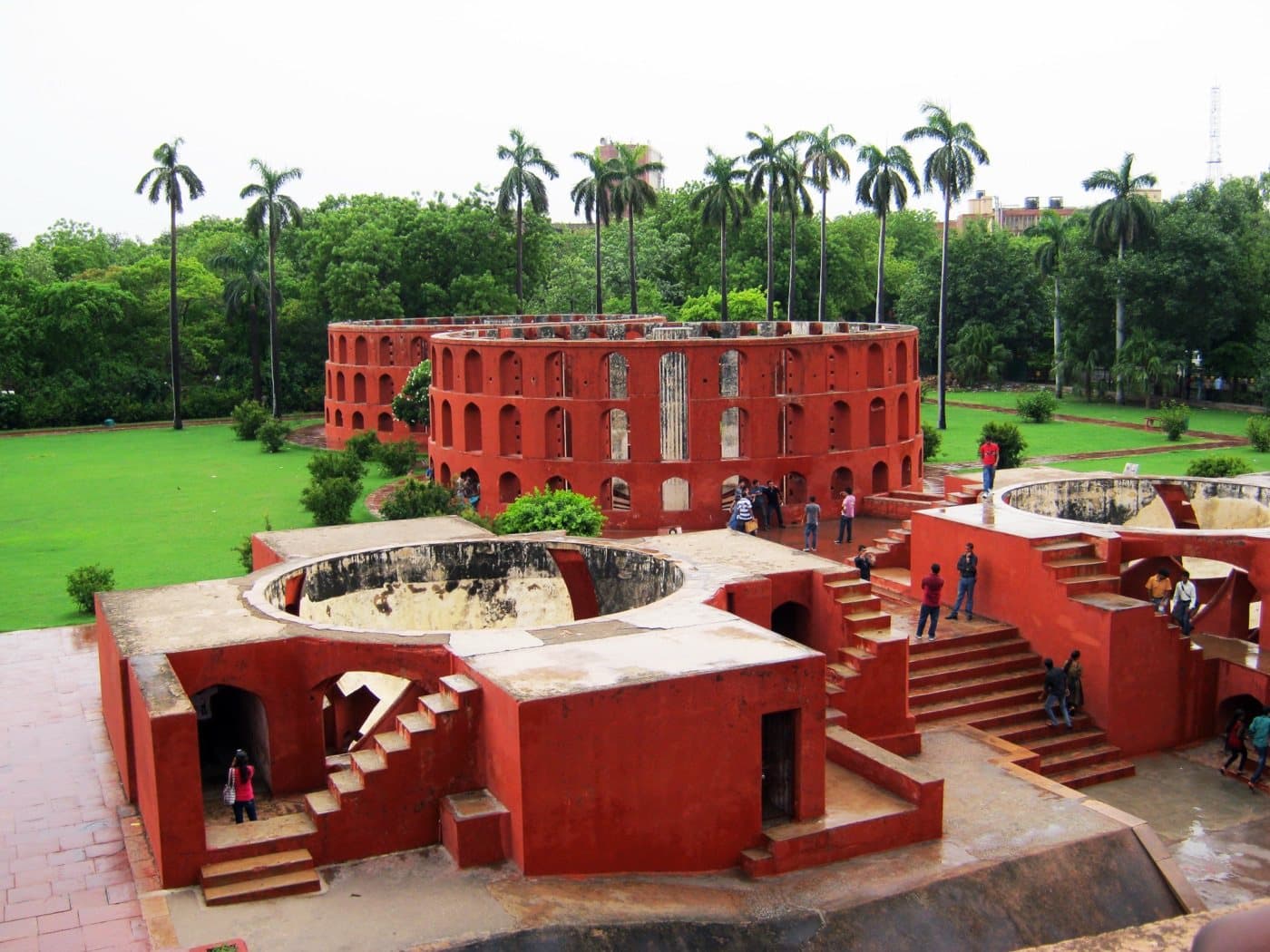
60–90 minutes with a few instrument explanations. · Outdoor
Delhi’s Jantar Mantar is an observatory made of large masonry instruments rather than a telescope dome. Check its own opening and access notes before adding a second stop.
Indoor
The Museum of Illusions in Connaught Place turns perspective, mirrors and visual cues into an hour of family experiments and playful photographs. Check its own opening and access notes before adding a second stop.