Let one experiment take longer
Ask what the child expects, try the exhibit as instructed and change one variable where permitted. Give siblings separate turns rather than turning the visit into a race between floors.
A hands-on science museum beside Bengaluru’s Cubbon Park district, with a refurbished Fun Science gallery, engines, electricity, space and biotechnology exhibits.
Detailed source-linked family guide
1 photo · Amanjosan2008 · CC BY-SA 3.0 · Photos are representative and may not show current conditions. Credits →
Desk research, not a site visit. Re-check the official notice on the morning you travel.
A hands-on science museum beside Bengaluru’s Cubbon Park district, with a refurbished Fun Science gallery, engines, electricity, space and biotechnology exhibits. Choose a few galleries and one optional show for a rewarding family visit rather than trying to finish every floor.
Strongest fit for curious primary-school children and older; preschoolers need a shorter, selective visit. This is editorial age guidance, not an admission restriction.
The museum works best when children have time to test an idea and try again. Completing every gallery is not the measure of a good visit.
Ask what the child expects, try the exhibit as instructed and change one variable where permitted. Give siblings separate turns rather than turning the visit into a race between floors.
General admission and optional experiences are different purchases. Match one show to the child’s interest and attention, and leave enough time to reach it without rushing through the galleries you came to explore.
Visvesvaraya Industrial and Technological Museum is a substantial science outing on Kasturba Road, close to Cubbon Park. Its strongest family experience is the chance to manipulate a permitted exhibit, notice an unexpected result and try again. It is particularly useful for a child who asks how something works but loses interest when the answer becomes a long lecture. An adult does not need to know every explanation: read the instructions together, predict the result and compare it with what actually happens.
This is a multi-gallery museum rather than a soft-play centre. There are objects to observe, explanations to read and interactive stations to take turns using. The visit becomes tiring if a family treats the number of floors completed as the measure of success. Choose two main interests and one optional show, with time for toilets and a break. A child who spends ten minutes investigating one exhibit has not fallen behind; that is often the point of coming.
For a first visit, allow approximately two to three hours for selected galleries. A keen school-age child can use a longer half-day, especially with a show, but a preschooler may enjoy a much shorter visit. These are planning suggestions, not ticket time limits. Individual displays may be unavailable on the day; avoid promising a single machine or dinosaur movement as the reward for the whole journey.
VITM official homepage — opening days and recent exhibits · Karnataka Tourism — VITM visit and transport overview
The revamped Fun Science gallery opened on 27 July 2025. NCSM describes roughly 50 hands-on exhibits covering mechanics, optics, sound and mathematics, including illusions, puzzles and thermal-imaging activities. This recent refurbishment matters when comparing the museum with older travel accounts: an old description of the room may no longer match its present arrangement.
This is a useful starting point for children who need an immediate action rather than background history. Try a simple family routine: first the child predicts what will happen, then operates the exhibit as instructed, then changes one permitted variable. If an optical illusion fools both parent and child, ask what the eyes appear to report and what the physical setup reveals. The aim is to notice a difference, not to deliver an instant textbook answer.
Allow siblings separate turns. An older child can read the instructions while a younger one watches the result, then swap roles where practical. If a station is busy, move to something less popular and return later; queueing for one effect can consume the attention that would make the rest of the gallery enjoyable.
The Engine Hall provides the museum’s mechanical context: machines are things that transfer energy and produce useful motion. Use the visible machinery to start with a concrete question such as which part moves first, or how motion reaches another part. The official museum inventory separately lists Engine Hall and How Things Work. Do not assume that every engine is running or that large displayed objects can be touched; the relevant exhibit instructions decide the level of interaction.
The district tourism authority identifies a full-scale Wright Brothers Flyer replica and a Flyer Simulator as notable attractions. Seeing the replica is different from paying for a simulator turn. Before buying the latter, ask how the experience operates, who can use it and whether its physical position is comfortable for your child. A flight-themed interest does not automatically mean a young child will enjoy the simulator.
The Dinosaur Enclave’s Spinosaurus is an animated reconstruction, not a fossil skeleton or a live animal. The official district description includes sound and movement, which may delight a dinosaur enthusiast but surprise a noise-sensitive preschooler. Look from a comfortable distance first. Explain what a model helps us imagine, while keeping expectations flexible if its mechanisms are not operating during your visit.
VITM official tender inventory — visitor facilities and galleries · Bengaluru Urban district — VITM aircraft and dinosaur displays
The Electrotechnic gallery connects familiar electricity use with the systems behind it. Its official sections include static and current electricity, electromagnetic induction, generation and distribution, and conversion of electrical energy. A useful family question is how electricity reaches a home and what changes when it powers a light, fan or another appliance. The explanation need not cover the whole gallery in one sitting.
For older children, the published energy-demand and nuclear-debate themes open a more thoughtful conversation: how should a city obtain enough power, and what trade-offs accompany different choices? The gallery also lists a Weather Studio, Smart Room and quiz corner. These are documented components, not a promise that every interactive station will be available on the day.
The BEL Hall of Electronics has a recent addition worth asking about: the museum reports a collaborative multilayer 3D display launched on 13 March 2026, developed with an IISc team. It allows several viewers to explore different facets without special glasses. This is distinct from the separately ticketed 3D cinema. Let two family members compare what they can see from different positions, following staff instructions rather than assuming it works like a normal touch-screen.
VITM Electrotechnic Gallery · VITM official homepage — opening days and recent exhibits
The Space Technology gallery is on the second floor according to the museum. Its named sections take the subject beyond a rocket photograph: launch infrastructure, mission control, astronauts, satellites, rockets, space applications and GPS. A child interested in launches can follow the journey from getting off the ground to doing something useful in orbit. Another child may connect more readily with a navigation app and the question of how a phone knows its position.
A practical route is to choose three connected ideas—launch, control and application—rather than read every panel. Ask what a satellite must do after the dramatic launch is over. That keeps the visit grounded in an engineering problem instead of a list of vehicle names. The official page describes interactive and immersive exhibits; it does not guarantee a staffed astronaut activity or simulator session for every visitor.
Biotechnology is a different kind of science stop, especially useful for older children interested in living things. The gallery covers genetics, techniques and applications in food, agriculture, industry and medicine, with digital material and an opinion-poll element. Begin with something everyday, such as food production, then ask how people use living systems to solve a problem. The opinion component can prompt a conversation about benefits and concerns, rather than treating all new technology as automatically good or bad.
These four extras should be chosen separately from the main gallery admission. The museum’s 3D theatre is a film experience; confirm the current title, running time, language and suitability before paying. It can be a pleasant seated change of pace, but children uncomfortable with 3D glasses or dark rooms may prefer another gallery.
Science on a Sphere uses a projected globe to explain planetary and environmental data. The museum describes imagery involving storms, ocean currents and climate, accompanied by narration. It is a strong choice when a child already enjoys maps, planets or weather: ask them to follow one moving pattern rather than understand every dataset. Do not confuse it with either the 3D film or a conventional planetarium show.
Taramandal is the museum’s astronomy show, and the Flyer Simulator is an aviation activity. Current session times, language rotations, age or height restrictions and duration were not established from an accessible operator schedule. Ask at arrival which are actually running and whether places remain. The separate Jawaharlal Nehru Planetarium is another Bengaluru venue; its admission and child rules do not automatically apply to VITM’s Taramandal.
Buying all four is rarely necessary for a first family visit. Choose the extra that matches the child’s strongest interest and leave enough time for the hands-on galleries. A show timetable can otherwise turn the day into repeated waiting, particularly if a younger sibling is already tired.
VITM 3D Show · VITM Science on a Sphere · VITM official homepage — opening days and recent exhibits · Karnataka Tourism — VITM visit and transport overview
The live official booking page checked on 24 October 2026 displays ₹100 per person and says everyone above five years requires a ticket. The wording does not settle the exact fifth-birthday boundary clearly, so ask the museum if a child is exactly five. Do not apply organised-school concessions to an ordinary parent-and-child outing, and do not assume a free general-entry category would automatically include optional shows.
Current add-on prices could not be independently confirmed on an accessible operator tariff. A February 2026 secondary transcription lists the 3D show at ₹45 and Taramandal at ₹15; a September 2026 secondary guide lists 3D at ₹50, Science on a Sphere at ₹50, Taramandal at ₹20 and the Flyer Simulator at ₹60. These conflicting figures are useful only as dated planning references. The museum counter or official booking selection is the authority for the amount payable.
For two adults and two children who both require admission, general entry is ₹400 at the verified rate. If all four choose a 3D show, the cited ₹45–₹50 reference gives an illustrative ticket subtotal of ₹580–₹600. A gallery-only visit for one adult and one paying child is ₹200. These examples exclude travel, meals, parking, any payment charges and all other extras; they are arithmetic planning examples, not a currently sold family package.
If keeping costs controlled, the best decision is often to buy the verified gallery admission and choose one extra after checking its content and schedule. Paying more does not guarantee a better learning experience. Keep a small backup payment option and confirm accepted methods at the show counter instead of assuming an international card or one particular app will work everywhere.
VITM live ticket booking — ₹100 admission and arrival rules · India Customer Care — dated February 2026 tariff transcription · Traveliac — September 2026 secondary tariff, not operator confirmation
The museum publishes 9:30am–6pm and states that it opens daily except Deepavali and Ganesha Chaturthi. There is no routine Monday closure stated on the current homepage. Check the museum’s notices for the actual festival date and any special closure affecting your visit; a generic “open all days” listing is less precise than the operator’s exception.
The official online booking page requests that online-ticket holders arrive before 5pm. That is an arrival instruction, not a recommendation to begin a full museum visit at that time. Start substantially earlier if galleries and a show are the purpose of the trip. Morning arrival gives a family more flexibility, although no particular hour can be guaranteed quiet.
Book through the official museum website and retain the digital or printed ticket. The published terms make tickets date-specific and non-transferable, with cancellation and refunds generally unavailable unless stated otherwise. Recheck your date and visitor count before paying. The booking page provides computersection.vitm@gmail.com for payment/ticket problems; general museum enquiries are on 080-22866200 or vitmuseum@gmail.com.
VITM official homepage — opening days and recent exhibits · VITM live ticket booking — ₹100 admission and arrival rules · VITM official booking terms
An official museum facilities inventory lists toilet blocks and a canteen/cafeteria. That confirms infrastructure, not today’s menu, service hours or suitability for a particular dietary need. Ask where the nearest toilet and drinking-water point are when you enter, and schedule a break before a child becomes too tired to enjoy the next floor. Food should be eaten only where permitted, away from exhibits.
A current detailed visitor-access audit was not found. Families needing a step-free route should confirm entrance access, working lifts, accessible toilets and wheelchair arrangements directly before travelling. The same applies to large strollers, baby-changing facilities, feeding rooms, lockers and re-entry after an outside meal: none should be promised from generic directory descriptions. Explain your specific requirement when calling rather than asking only whether the building is accessible.
For a child sensitive to sound, darkness or crowding, start with a short visit and avoid making a show compulsory. The dinosaur’s effects and the 3D theatre are different sensory experiences from simply looking at an engine. Choose an easy meeting point for older children, and keep younger ones beside an adult while moving between floors. These are practical planning suggestions, not claims of a dedicated quiet room or special sensory session.
VITM official tender inventory — visitor facilities and galleries · VITM official booking terms · Bengaluru Urban district — VITM aircraft and dinosaur displays
Use the museum’s full name and Kasturba Road address for navigation: Visvesvaraya Industrial and Technological Museum, Kasturba Road, Bengaluru 560001. Karnataka Tourism identifies Cubbon Park Metro as a nearby rail option and also notes buses, taxis and auto-rickshaws. Check a current metro journey planner and walking route from the selected exit rather than assuming the station gate opens directly at the museum.
For a family with a stroller, substantial bags or limited walking tolerance, compare the total metro-plus-walk journey with a direct taxi or auto drop-off. Road crossings and the last stretch matter as much as the headline train journey. Nearby parking is mentioned by tourism information, but a reserved museum space, current rate or guaranteed availability was not verified. Do not build a tight show arrival around finding parking immediately.
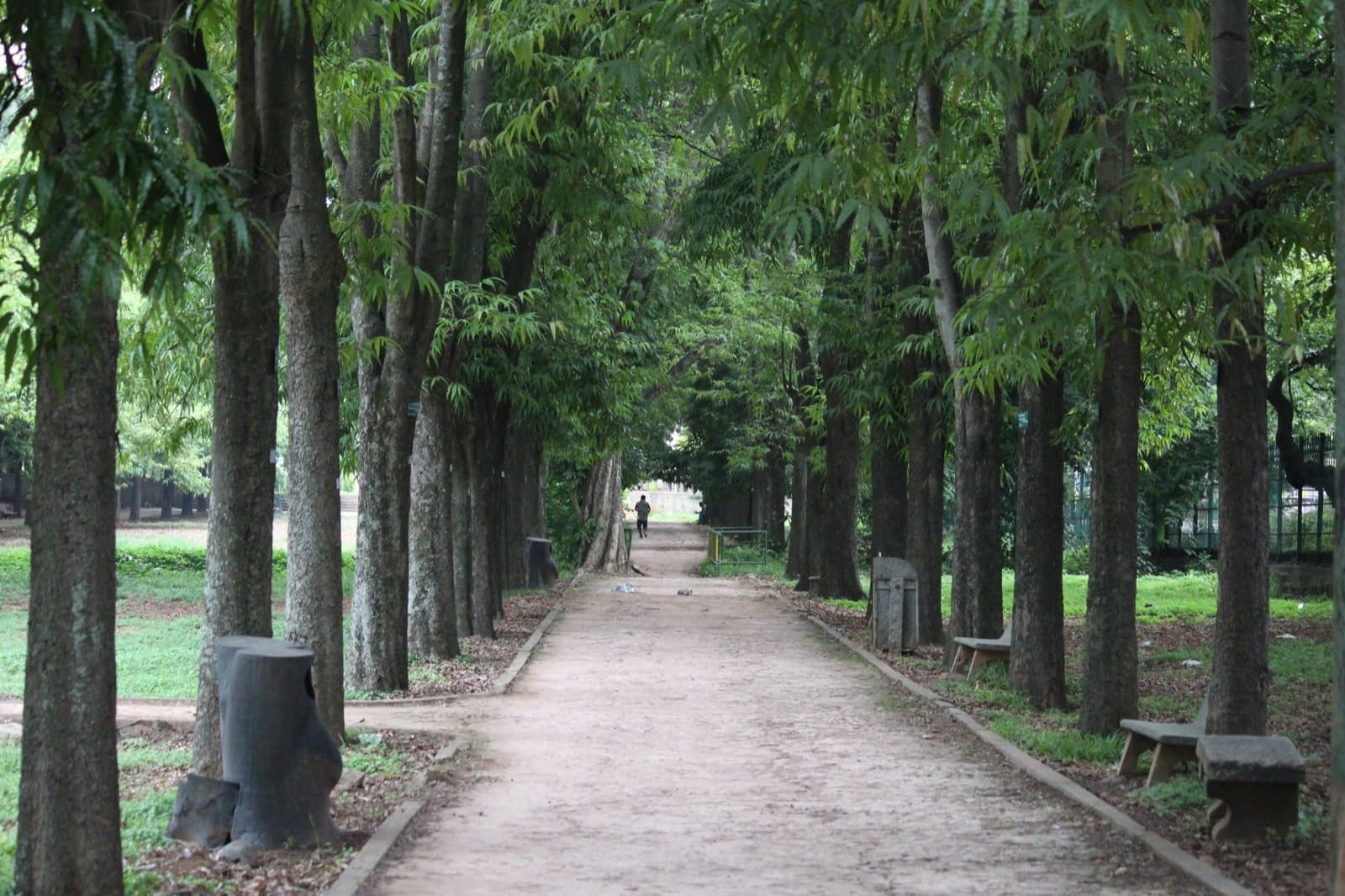
Cubbon Park can be an outdoor finish after a focused museum visit, provided weather, current park access and children’s energy cooperate. Keep it a short optional walk, not another compulsory checklist. The neighbouring cultural attractions also have their own opening days and tickets. A successful first visit can be just two museum galleries, one chosen show and a meal; there is no need to fill every remaining hour because several attractions share the same district.
Karnataka Tourism — VITM visit and transport overview · VITM official homepage — opening days and recent exhibits
Prices, access and programmes can change. Confirm with the operator before setting out.
Visvesvaraya Industrial and Technological Museum, Kasturba Road, Bengaluru 560001
Search-based Google map. Confirm the public entrance before travelling; this is not a surveyed entrance pin.
The current official homepage says daily opening, with Deepavali and Ganesha Chaturthi exceptions. It does not list a routine Monday closure. Check notices for your particular date.
The official live booking page checked 24 October 2026 shows ₹100 per person and says everyone above age five needs a ticket. Because the exact age-five boundary is not explicit, confirm with the museum before booking that child.
Do not assume so. Official tourism information identifies the special shows and simulator as separate extras. Confirm the current add-on price and availability at booking or the counter.
The refurbished Fun Science gallery is a useful starting point for hands-on experimenting. Let the child repeat a few activities rather than rushing through every station; add Space Technology or Engine Hall according to their interests.
The museum homepage and NCSM report its reopening on 27 July 2025. Individual exhibits can still be unavailable, so a historic refurbishment notice should not be confused with today’s operating status.
Science on a Sphere displays planetary and environmental information on a projected globe with narration. The 3D show is a theatre film. Choose according to the child’s interests and comfort with the format.
No. VITM’s Taramandal is an activity within this museum; Jawaharlal Nehru Planetarium is a separate attraction. Check each venue’s own booking, age and language rules.
The live booking page asks online visitors to arrive before 5pm and says the museum closes at 6pm. Plan earlier rather than relying on a later counter time quoted by another website.
A current official age/height or physical-position rule was not verified. Ask staff before paying. Viewing the Wright Flyer replica is a separate experience and may be enough for a younger child.
If all four require tickets, verified general admission totals ₹400. Adding a 3D show for everyone gives an illustrative ₹580–₹600 using conflicting dated secondary rates of ₹45–₹50; confirm the actual show tariff. Travel, meals and other extras are additional.
Your first-hand tip helps the next family: the best time to go, where the toilets are, what to skip. An editor reads every tip before it appears.
Desk-checked against linked primary sources on 2026-11-01; not a site visit. Ages, durations and suggested activities are editorial advice. Confirm date-specific access, prices and facilities before travel. Last checked 1 November 2026.
Tell us what has changed: new hours, a price, a closed gallery, a changing table that exists or doesn’t. We check against a source before publishing.
Run Visvesvaraya Industrial and Technological Museum? Claim this listing to take enquiries and send us updates. It’s free.
Consider one of these if there is time and energy left. They are alternatives; the route link lets you check the journey before adding a stop.
30–60 minutes casual visit · Indoor & outdoor
A BMRCL cultural strip beside MG Road Metro, combining galleries, performance spaces and a children’s activity area. Check its own opening and access notes before adding a second stop.
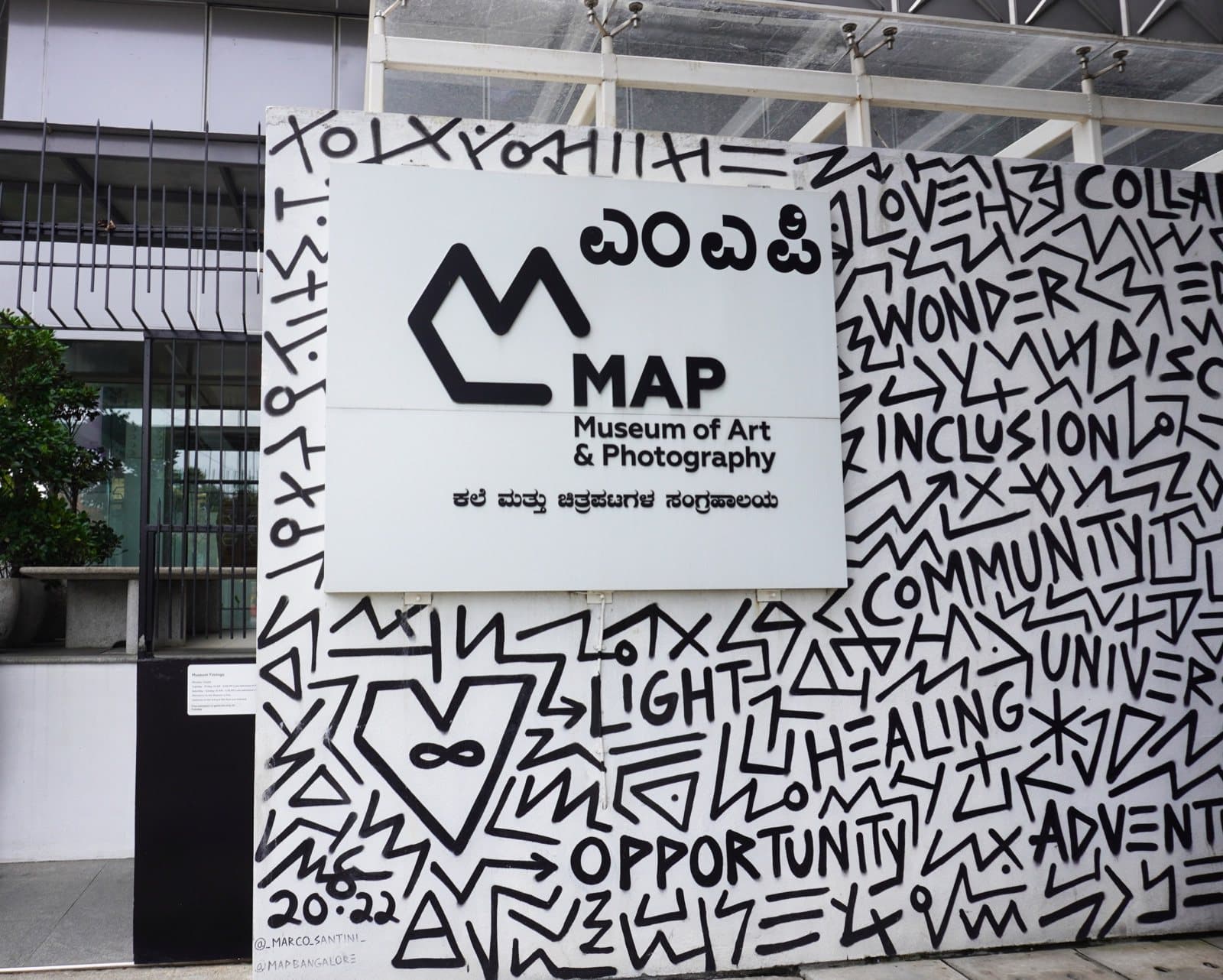
Suggested 90 minutes–2 hours · Indoor & outdoor
An art museum near Cubbon Park where families can connect paintings, photographs and visual stories with immersive digital experiences. Check its own opening and access notes before adding a second stop.
Allow 60–90 minutes for a family park walk · Outdoor
Cubbon Park gives families a shaded break in central Bengaluru: tree-lined paths, the red State Central Library exterior and space for a slow nature walk. Check its own opening and access notes before adding a second stop.