Ask what the child sees before explaining
Let children name the shapes in the screen first. Their own discovery of a tree or vine creates a stronger connection than immediately supplying the famous motif’s name.
Sidi Saiyyed Mosque is a compact but memorable stop for families interested in pattern and craftsmanship.
AMC publishes free visitor access outside prayer times. The mosque remains active; access to a specific viewing position depends on worship and local instructions.
1 photo · Ramesh lalwani · CC BY-SA 4.0 · Photos are representative and may not show current conditions. Credits →
Desk research, not a site visit. Re-check the official notice on the morning you travel.
Sidi Saiyyed Mosque is a compact but memorable stop for families interested in pattern and craftsmanship. Its celebrated stone screens turn branching trees and vines into delicate silhouettes, offering children an immediate visual puzzle. Allow a short, respectful visit outside prayer times and approach carefully through the busy Lal Darwaja surroundings; this is not a site that needs a long lecture or a hurried road-side photograph.
All ages can appreciate the stone screens, but small children need close supervision near surrounding traffic. This is an active mosque, not a play or climbing stop.
This stop is most rewarding when the family slows down enough to see the pattern. The surrounding traffic and active prayer space make a clear arrival plan as important as the historical explanation.
Let children name the shapes in the screen first. Their own discovery of a tree or vine creates a stronger connection than immediately supplying the famous motif’s name.
Decide on a safe viewing position before taking out a phone. No memorable angle is worth separating a child from the group or standing in moving traffic.
Explain that prayer may change where visitors can stand. A child who knows this beforehand is more likely to accept waiting briefly or choosing a different view.
The famous jali screens show interlacing natural forms. Ask children what they see before naming the tree-of-life motif: a trunk, leaves, vines or a pattern that looks almost like lace. Then explain that the delicacy comes from carved stone, not a woven material.
A useful second look is to follow one branch with the eyes and see how it joins the larger pattern. This can hold attention for a few minutes without turning the visit into a worksheet. Keep hands away from the carving and do not lean into openings to obtain a closer photograph.
AMC: Sidi Saiyyed Mosque · Gujarat Tourism: Sidi Saiyyed Mosque
Completed in the sixteenth century, the mosque was commissioned by Sidi Saiyyed, a man of African descent connected with Gujarat’s courtly world. That introduces an important idea for older children: Ahmedabad’s history was shaped by people with different origins and connections.
The building’s open frontage and arches give it a different feeling from the much larger courtyard of Jama Masjid. You can compare those forms if visiting both, but each deserves its own quiet observation. Avoid reducing the mosque to a logo or souvenir design; people still come here for prayer.
A carved screen changes as light passes through it. Look at the relationship between the solid stone and the openings rather than chasing a single photographic angle seen online. The sun, weather and your permitted viewing position affect what you can see on any visit.
Ask a child which parts seem darkest and whether the pattern reads more clearly from a little farther away. If the best view is occupied by worshippers or another group, wait or choose another permitted position. The activity should adapt to the mosque rather than require anyone to move for a family photograph.
AMC lists ordinary entry as free. A family of four can therefore budget ₹0 for visiting the mosque itself, excluding transport or any voluntarily arranged service. There is no need to buy a general old-city tour merely to look at the monument during permitted visitor hours.
AMC’s organised evening heritage walk uses Sidi Saiyyed as a starting point and charges separately. Joining that guided route is a different product, with a meeting time, duration and booking terms. Do not mistake the tour price for a mosque admission charge or assume its evening schedule grants unrestricted interior access.
AMC describes dawn-to-dusk visiting outside prayers and gives 06:00–18:30 as its published timetable. Prayer, religious gatherings and local management determine access to particular parts. Ask respectfully on arrival if unsure rather than entering a space because another tourist did so.
Wear appropriate clothing and follow instructions about shoes and any head covering. Keep voices low, silence devices and ask before photographing people. The public sources used here do not establish one universal access rule for every visitor category, so do not infer a blanket permission or prohibition for women from rules at another mosque.
The Lal Darwaja setting is busy and the mosque is much smaller than some visitors expect. The safest family plan is to identify the pedestrian approach, cross together at an appropriate place and choose a permitted viewing position. Do not stand in the road to recreate a rear-window photograph.
A taxi may need to stop a little away from the entrance. Agree on the return location before getting out, especially if travelling with a stroller or an older adult. The guide does not certify a fully accessible internal route; ask about thresholds and permitted access if mobility is a concern.
AMC: Sidi Saiyyed Mosque · Gujarat Tourism: Sidi Saiyyed Mosque
Bhadra Fort and the old-city markets are in the wider surrounding cluster, but crowded streets can make even a short map distance tiring. After twenty minutes at the mosque, decide whether the family wants a further heritage stop or a seated break. Do not assume a road crossing and market lane are equivalent to a quiet pedestrian promenade.
There is no verified visitor café, baby-changing room or dedicated tourist toilet included with this stop. Take care of food and toilet needs elsewhere beforehand. A short visit centred on one remarkable screen can be complete in itself, especially for a child who has already seen several monuments.
Prices, access and programmes can change. Confirm with the operator before setting out.
Sidi Saiyyed Mosque, near Lal Darwaja, opposite the House of MG area, Ahmedabad, Gujarat
Search-based Google map. Confirm the public entrance before travelling; this is not a surveyed entrance pin.
Start with the branching tree and interlacing vines, then notice that the delicate pattern is carved stone. Following one branch visually is a simple activity that does not require touching.
AMC lists ordinary entry as free. An organised heritage walk starting nearby is a separately charged tour, not the mosque’s admission fee.
AMC lists 06:00–18:30 and says dawn-to-dusk access except during prayers. Follow current local instructions and allow worship to take priority.
No. Do not confuse this jali-screen mosque with Sidi Bashir’s Jhulta Minar site. They are different monuments and require different map destinations.
Most families can make a focused 20–30-minute visit. Allow additional time only for prayer-related waiting or a strong interest in the architecture.
Do not step into traffic for a preferred angle. Choose a safe, permitted position and respect restrictions on photography and the privacy of worshippers.
The reviewed visitor guidance does not establish universal access to every space. Ask the mosque’s staff about the current permitted visitor route and follow their instructions.
No. It identifies the mosque as a starting point, but tour timing does not override prayer or interior access restrictions. Confirm the walk’s actual format before booking.
They are in the same broader old-city cluster, but the intervening streets and crossings need care. Check the walking route and use a short transfer or stop early if the crowd is uncomfortable.
Your first-hand tip helps the next family: the best time to go, where the toilets are, what to skip. An editor reads every tip before it appears.
Desk-checked against linked primary sources on 2026-11-01; not a site visit. Ages, durations and suggested activities are editorial advice. Confirm date-specific access, prices and facilities before travel. Last checked 1 November 2026.
Tell us what has changed: new hours, a price, a closed gallery, a changing table that exists or doesn’t. We check against a source before publishing.
Run Sidi Saiyyed Mosque? Claim this listing to take enquiries and send us updates. It’s free.
Consider one of these if there is time and energy left. They are alternatives; the route link lets you check the journey before adding a stop.
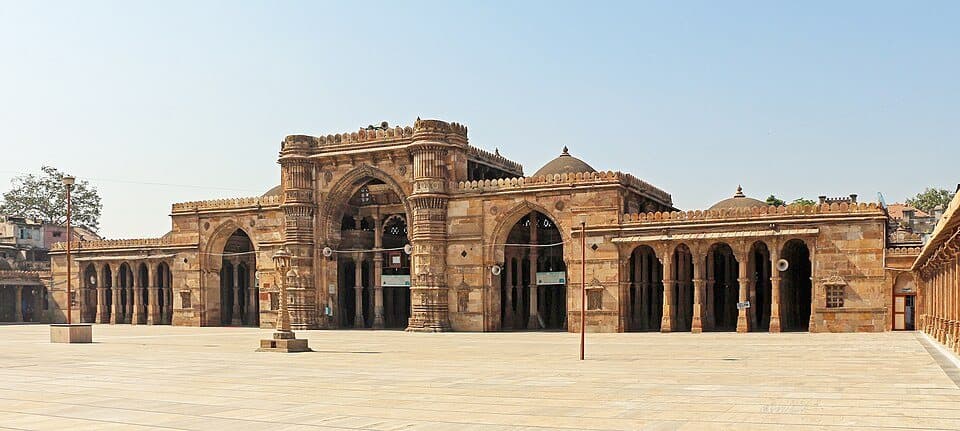
30–45 minutes outside prayer · Indoor & outdoor
Ahmedabad’s Jama Masjid gives families a powerful contrast with the busy lanes outside: a broad courtyard, an ablution tank and a prayer hall shaped by repeated columns and domes. Check its own opening and access notes before adding a second stop.
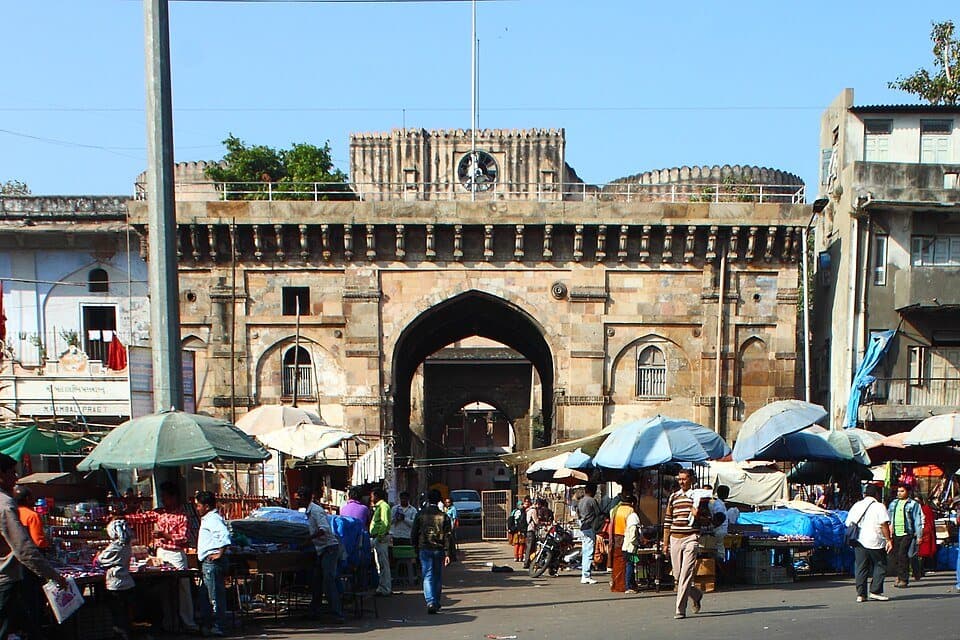
30–60 minutes · Indoor & outdoor
Bhadra Fort works best as a compact introduction to Ahmedabad’s old city: a powerful gateway, a clock tower, a temple and the busy streets around a former royal precinct. Check its own opening and access notes before adding a second stop.
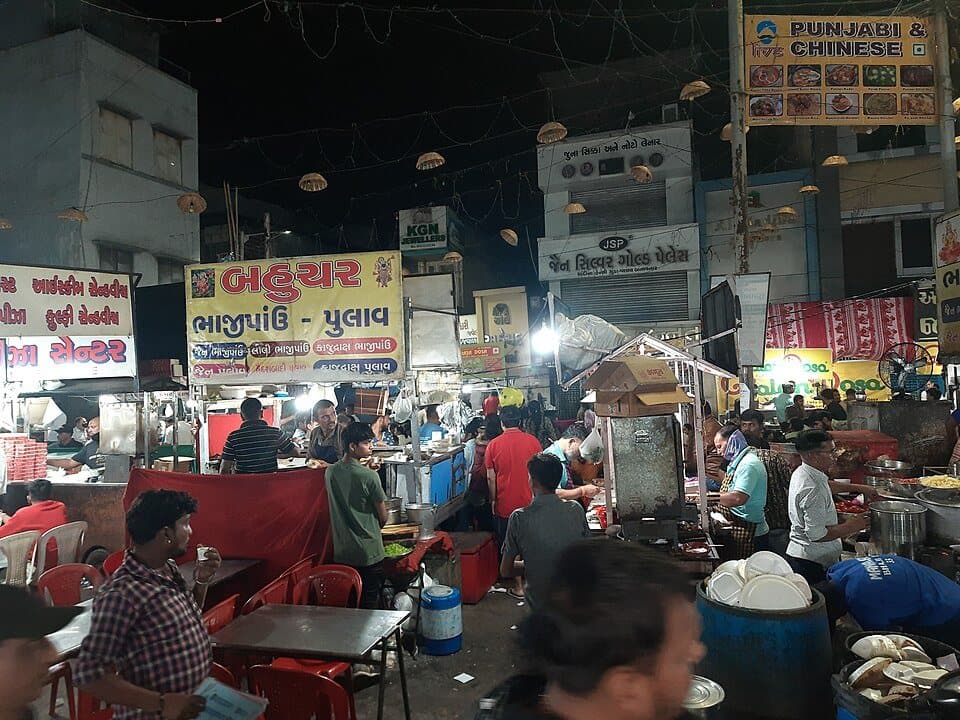
45–75 minutes for a short self-guided circuit · Outdoor
A Manek Chowk heritage walk links Ahmedabad’s trading streets, historic façades and places of worship at a human scale. Check its own opening and access notes before adding a second stop.