Explain the tank before children approach
Tell children that the water belongs to preparation for prayer, not play. Set a clear observation point so curiosity does not turn into leaning over the edge.
Ahmedabad’s Jama Masjid gives families a powerful contrast with the busy lanes outside: a broad courtyard, an ablution tank and a prayer hall shaped by repeated columns and domes.
AMC lists free admission and visiting hours. This is a working mosque, with prayer and locally directed visitor access taking priority.
1 photo · Bernard Gagnon · CC BY-SA 3.0 · Photos are representative and may not show current conditions. Credits →
Desk research, not a site visit. Re-check the official notice on the morning you travel.
Ahmedabad’s Jama Masjid gives families a powerful contrast with the busy lanes outside: a broad courtyard, an ablution tank and a prayer hall shaped by repeated columns and domes. Children can explore the idea of rhythm in architecture while learning why a mosque needs both shared open space and sheltered worship space. Visit quietly outside prayer, and follow the specific route permitted to your family.
Children can appreciate the courtyard and repeating columns without a long tour. Prepare younger visitors for shoe removal, quiet behaviour and keeping away from the ablution tank.
Children often respond to the dramatic change from market noise to open space. A short explanation of prayer, the tank and the permitted route lets them appreciate that contrast respectfully.
Tell children that the water belongs to preparation for prayer, not play. Set a clear observation point so curiosity does not turn into leaning over the edge.
Use one row of columns or a few roof bays as the activity. This lets a child notice repetition without wandering into areas reserved for worship.
Access to the prayer hall may differ between visitors. Ask together at arrival so nobody is surprised and the courtyard can remain a shared, worthwhile experience.
The first useful family activity is simply to stop and notice the difference between the surrounding market streets and the mosque’s open court. Ask children which sounds have changed and how the space directs their attention. This lets the setting explain itself before introducing historical facts.
The central ablution tank has a religious purpose. Explain that washing before prayer is different from playing with water, and keep children away from its edge. The open courtyard is not a running area even when it appears empty; other visitors may be preparing for worship or moving quietly between spaces.
Gujarat Tourism describes a prayer hall with many stone columns and fifteen domes. From the area visitors are permitted to use, notice how rows repeat and how the roof feels different from an open courtyard. A child can count a short row or compare two visible bays without trying to verify every published total.
For older children, ask how a large roof can be supported by many smaller structural units. For younger ones, finding a repeated shape is enough. The experience does not require entering a restricted part of the hall, climbing to a gallery or interrupting a worshipper to obtain a symmetrical photograph.
The mosque belongs to the early fifteenth-century city associated with Sultan Ahmed Shah. Its setting beside important market and royal sites makes it a useful anchor for understanding how worship, government and commerce occupied the old city. Keep the explanation tied to places the child can actually see or has just passed.
The carved details draw on regional craftsmanship as well as the needs of an Islamic place of worship. Rather than labelling every motif, compare the decoration with the building’s broad geometry. A short discussion about how craftspeople adapt familiar techniques can be more memorable than a list of architectural terms.
AMC lists free admission, so a family of four has a ₹0 entry budget. Travel and any separately agreed guide service are additional. If someone offers guiding, clarify the fee and what it includes before accepting; it should not be confused with an official entrance charge.
The municipal morning heritage walk ends at Jama Masjid and has its own booking price. That can add context for families able to manage a longer walking route, but it is not necessary for an independent respectful visit. A free mosque visit and a paid guided city walk are separate choices.
The municipal timetable is 06:00–21:00, but this is an active mosque rather than a museum operating uninterrupted sightseeing sessions. Ask about the visitor route and avoid arriving during congregational prayer. Friday’s main prayer is particularly unsuitable for assuming a quiet, unrestricted family tour.
AMC specifically notes restrictions on women entering the main prayer hall. Follow the current instructions at the mosque and plan a courtyard-focused visit where permitted rather than promising every family member identical interior access. Do not infer that a restriction on one hall means the entire monument is always inaccessible.
Wear appropriate clothing and be ready to remove shoes where instructed. Keep footwear together and ask about any required head covering. On sunny days the open paving can be uncomfortable, so choose a cooler visit and ask staff about an acceptable way to manage hot surfaces rather than improvising against local rules.
Carry only what the family needs and keep snacks for outside the worship space. Ask before photographing interiors or people. The guide does not establish a tourist baby-changing room, dedicated café or fully step-free route; if these are essential, arrange the necessary stop beforehand and enquire about thresholds.
The mosque is near Manek Chowk, but reaching it means negotiating the old city’s streets, shops and possible works. Save the exact entrance and arrange a realistic drop-off or pickup on a road your driver can use. A stroller may be less convenient through congested approaches, so keep the route short and assess conditions on arrival.
The nearby night-food market is a separate experience with its own operating conditions. Do not keep young children waiting for an assumed late dinner after a daytime mosque visit. Finish the heritage stop first, then choose food based on confirmed availability and the family’s energy.
Prices, access and programmes can change. Confirm with the operator before setting out.
Jama Masjid, near Manek Chowk, Gandhi Road, old city, Ahmedabad
Search-based Google map. Confirm the public entrance before travelling; this is not a surveyed entrance pin.
Yes. AMC lists ordinary admission as free. Paid guiding and organised heritage walks are separate from mosque entry.
Do not plan a sightseeing visit during the main congregation. Worship takes priority, crowds can be substantial and visitor access may be limited; ask about a suitable time outside prayer.
AMC’s visitor information notes a restriction on women entering the main hall. Follow the current local instructions and plan around permitted courtyard access rather than promising identical access for everyone.
It is associated with ablution before prayer. Explain its religious purpose and keep children from playing with the water or approaching the edge unsupervised.
Look for repeated rows and the relationship between columns and domes. Count a small visible section from the permitted visitor area rather than trying to explore every part of the prayer hall.
No. It is the broad municipal timetable. Prayer, local instructions and restrictions on particular spaces still apply.
Be prepared to remove footwear where directed. Keep shoes together, dress respectfully and ask about the current visitor route and head-covering instructions.
No. The guided walk ends here but is a separate paid activity. An independent visit is possible during permitted visitor access.
Only if the stalls are confirmed operating at that time. Daytime heritage visiting and the late-night food market are different plans, and local works can affect the market.
Your first-hand tip helps the next family: the best time to go, where the toilets are, what to skip. An editor reads every tip before it appears.
Desk-checked against linked primary sources on 2026-11-01; not a site visit. Ages, durations and suggested activities are editorial advice. Confirm date-specific access, prices and facilities before travel. Last checked 1 November 2026.
Tell us what has changed: new hours, a price, a closed gallery, a changing table that exists or doesn’t. We check against a source before publishing.
Run Jama Masjid Ahmedabad? Claim this listing to take enquiries and send us updates. It’s free.
Consider one of these if there is time and energy left. They are alternatives; the route link lets you check the journey before adding a stop.
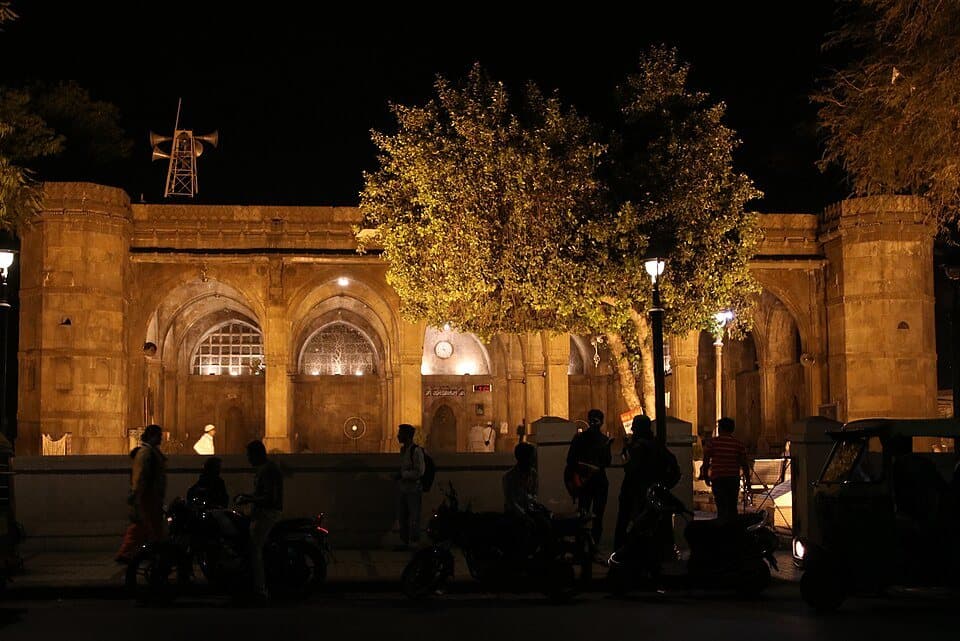
20–30 minutes, allowing for prayer-related access · Indoor & outdoor
Sidi Saiyyed Mosque is a compact but memorable stop for families interested in pattern and craftsmanship. Check its own opening and access notes before adding a second stop.
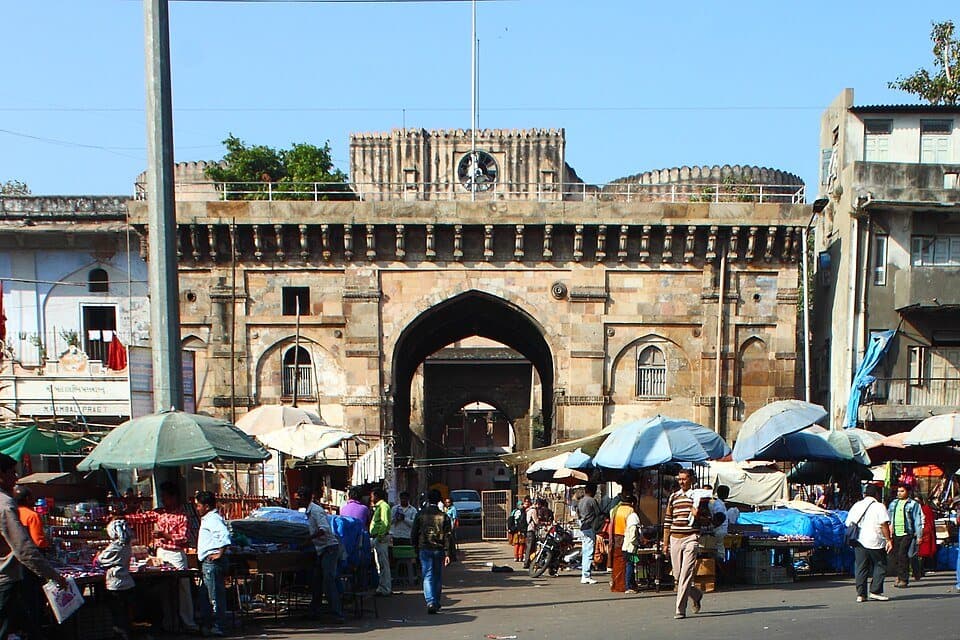
30–60 minutes · Indoor & outdoor
Bhadra Fort works best as a compact introduction to Ahmedabad’s old city: a powerful gateway, a clock tower, a temple and the busy streets around a former royal precinct. Check its own opening and access notes before adding a second stop.
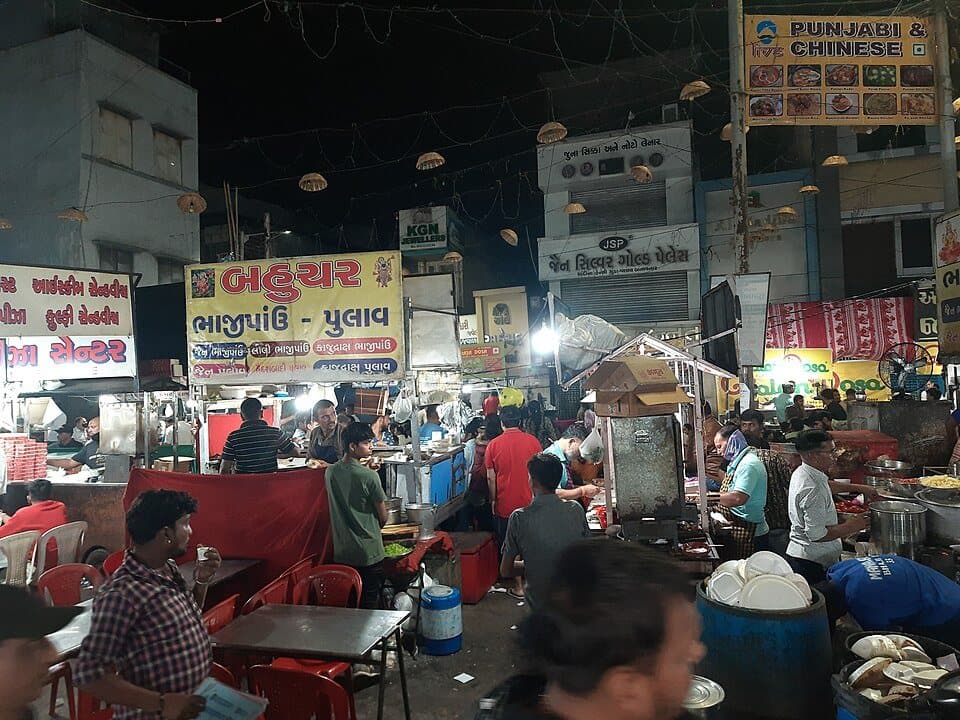
45–75 minutes for a short self-guided circuit · Outdoor
A Manek Chowk heritage walk links Ahmedabad’s trading streets, historic façades and places of worship at a human scale. Check its own opening and access notes before adding a second stop.