Explain remembrance before the footwear stop
Tell children why people lower their voices and pause here before entering the enclosure. Knowing the purpose makes respectful behaviour easier than introducing rules without context.
Raj Ghat is the memorial at Gandhi’s cremation site, centred on a simple dark stone platform, an eternal flame and a quiet landscaped setting.
Seasonal hours, free admission, weekly opening and facilities verified with the Rajghat Samadhi Committee. Ceremony-specific access remains variable.
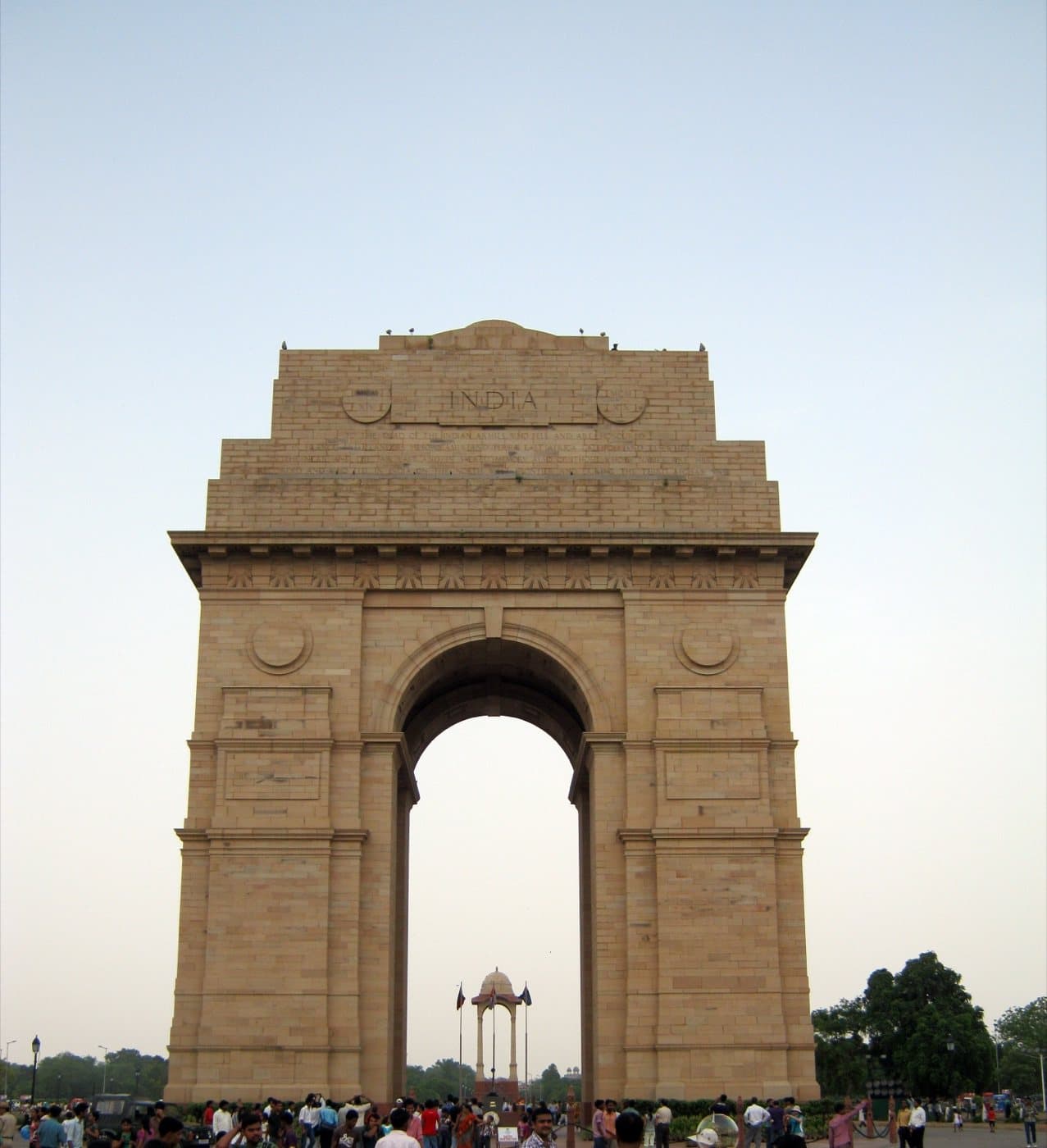
1 photo · Subeesh Balan സുഭീഷ് ബാലൻ · CC BY-SA 3.0 · Photos are representative and may not show current conditions. Context photograph — India Gate in New Delhi. Archival city context photograph. City context, not a photograph of Raj Ghat Gandhi Memorial.. Credits →
Desk research, not a site visit. Re-check the official notice on the morning you travel.
Raj Ghat is the memorial at Gandhi’s cremation site, centred on a simple dark stone platform, an eternal flame and a quiet landscaped setting. It is a short visit of remembrance rather than a museum tour. Children can notice how space, silence and a few carefully chosen elements communicate respect, then explore Gandhi’s life in greater detail at the separate museum nearby.
A short explanation before entering helps younger children understand why this is a quiet place. Keep the walk modest in heat and allow time to remove and collect footwear.
Children do not need an extensive history lecture here. A clear explanation, a quiet moment and one observation can be enough.
Tell children why people lower their voices and pause here before entering the enclosure. Knowing the purpose makes respectful behaviour easier than introducing rules without context.
The early seasonal opening offers flexibility, but the nearby museum opens later. Decide whether comfortable outdoor conditions or a combined museum visit should determine the start time.
A commemorative tree can help children understand that remembrance takes different forms. Compare its changing growth with the enduring stone platform without turning the walk into a long checklist.
Gandhi was cremated at this site on 31 January 1948, the day after his assassination. For a young child, a simple explanation may be enough: this is a place where people remember a leader and think about the ideas he stood for. Older children can connect it with the end of the freedom struggle and the difficult early months of independent India. The memorial is not the place where Gandhi was assassinated; that distinction helps avoid confusing Raj Ghat with Gandhi Smriti elsewhere in Delhi.
The central platform, flame and open space give the visit a very different character from a palace or a crowded museum. Ask children what they notice when a place has few decorative objects. The flame can introduce the idea of continuing remembrance, while the plain form invites attention rather than a search for spectacle. There is no need to rush towards a perfect photograph. A family can stand quietly for a moment, observe the arrangement and then discuss which detail made the strongest impression.
The walk through the landscaped grounds provides a useful transition from the road outside. Before reaching the inner enclosure, explain footwear removal and the quieter behaviour expected near the memorial. Give children a practical role, such as remembering where shoes were left or helping a sibling follow the route. Do not turn the platform or surrounding enclosure into a climbing or running game. A brief, respectful visit is entirely valid; younger children need not remain still for an adult-length period of reflection.
Incredible India: Raj Ghat memorial and visitor customs · Ministry of Housing and Urban Affairs: Rajghat access rules
The government tourism description notes trees planted by visiting dignitaries with identifying plaques. Where these are visible along the permitted route, children can compare a living tree with a stone memorial: both can be used to remember an event or person, but they change in different ways over time. Look at a plaque without feeling obliged to identify every international visitor. The grounds are also a place to notice shade, leaf shapes and the relationship between open lawn and enclosure. Stay on authorised routes and do not pick plants or treat the landscape as a picnic entitlement.
Incredible India: Raj Ghat memorial and visitor customs · Ministry of Housing and Urban Affairs: Rajghat access rules
The Committee lists all-religion prayers and spinning programmes every Friday. Such programmes reflect the memorial’s continuing use, but the homepage does not provide a verified visitor timetable for each session. Ask the Committee if attendance is important to the family. Explain that people may be participating in remembrance rather than performing for tourists. On major commemorative dates or official visits, access and movement can change. The site’s legal rules allow temporary restrictions on all or part of the premises, so a usual opening time is not an unconditional entry guarantee.
Rajghat Samadhi Committee: official visitor information · Ministry of Housing and Urban Affairs: Rajghat access rules
The responsible operator publishes 5am–7pm from April through September and 5:30am–6pm from October through March, with no weekly holiday. These are more specific than generic year-round hours on some travel pages. During warm weather, choose a comfortable outdoor period; in winter, leave enough daylight for the full approach and return. The separate National Gandhi Museum opens later and closes on Mondays, so an early memorial visit does not mean the museum will already be available. Decide which experience matters most before coordinating the two.
Rajghat Samadhi Committee: official visitor information · National Gandhi Museum: separate nearby museum hours
The Committee lists drinking water, a cafeteria, interpretation centre, souvenir shop and free parking. Treat these as published facilities, not a promise of a particular menu, opening time or available parking bay. Footwear removal applies near the memorial; follow staff instructions about the precise boundary. Exposed surfaces can become warm, so do not assume the walk is comfortable at midday simply because admission is free. If a wheelchair route or an accessible toilet is essential, confirm the actual arrangement before visiting; a complete current accessibility specification was not found.
Rajghat Samadhi Committee: official visitor information · Incredible India: Raj Ghat memorial and visitor customs
The Committee identifies Delhi Gate as the nearby Metro station, but the final journey still requires planning the correct exit and road crossing rather than assuming the station opens directly into the grounds. The National Gandhi Museum is a logical continuation for children who want objects and stories, with its own free admission and Tuesday–Sunday schedule. Alternatively, end with a short conversation about one idea from the visit. A memorial does not need another attraction to justify the journey, and a quiet half-hour can be a complete family experience.
Rajghat Samadhi Committee: official visitor information · National Gandhi Museum: separate nearby museum hours
Prices, access and programmes can change. Confirm with the operator before setting out.
Raj Ghat, Mahatma Gandhi Road / Ring Road, New Delhi 110002.
Search-based Google map. Confirm the public entrance before travelling; this is not a surveyed entrance pin.
No. It marks his cremation site. Gandhi Smriti is the separate Delhi site associated with his last residence and assassination.
Yes. The Committee publishes no admission fee and also lists free parking, subject to availability.
The Committee states no weekly closure. The nearby National Gandhi Museum does close Monday, which can cause confusion.
The operator lists 5:30am–6pm from October through March; April–September hours are 5am–7pm.
Visitors remove footwear for the memorial enclosure as directed. Prepare children before reaching that point and follow the local arrangement.
The Committee lists all-religion prayers and spinning programmes on Fridays. Confirm the day’s time and visitor arrangements directly.
The operator lists a cafeteria and drinking water. Current service hours and menu were not verified.
No. Temporary restrictions may apply to part or all of the site during security or ceremonial arrangements.
Raj Ghat is a remembrance landscape; the National Gandhi Museum explains Gandhi’s life through objects, photographs and galleries.
Delhi Gate. Check the current exit and final route; it is not a direct entrance into the memorial grounds.
Your first-hand tip helps the next family: the best time to go, where the toilets are, what to skip. An editor reads every tip before it appears.
Desk-checked against linked primary sources on 2026-11-01; not a site visit. Ages, durations and suggested activities are editorial advice. Confirm date-specific access, prices and facilities before travel. Last checked 1 November 2026.
Tell us what has changed: new hours, a price, a closed gallery, a changing table that exists or doesn’t. We check against a source before publishing.
Run Raj Ghat Gandhi Memorial? Claim this listing to take enquiries and send us updates. It’s free.
Consider one of these if there is time and energy left. They are alternatives; the route link lets you check the journey before adding a stop.
75–120 minutes for a selective family visit. · Indoor
The National Gandhi Museum opposite Raj Ghat makes Gandhi’s life tangible through spinning wheels, photographs, personal objects and the history of the freedom movement. Check its own opening and access notes before adding a second stop.