Start with something the child wears every day
Clothing provides a direct connection to the spinning wheels. Once children understand the practical work, the wider story of choices and political protest becomes easier to discuss.
The National Gandhi Museum opposite Raj Ghat makes Gandhi’s life tangible through spinning wheels, photographs, personal objects and the history of the freedom movement.
Current operator hours, free entry and gallery descriptions checked. Films or special educational sessions require current confirmation rather than relying on older schedules.
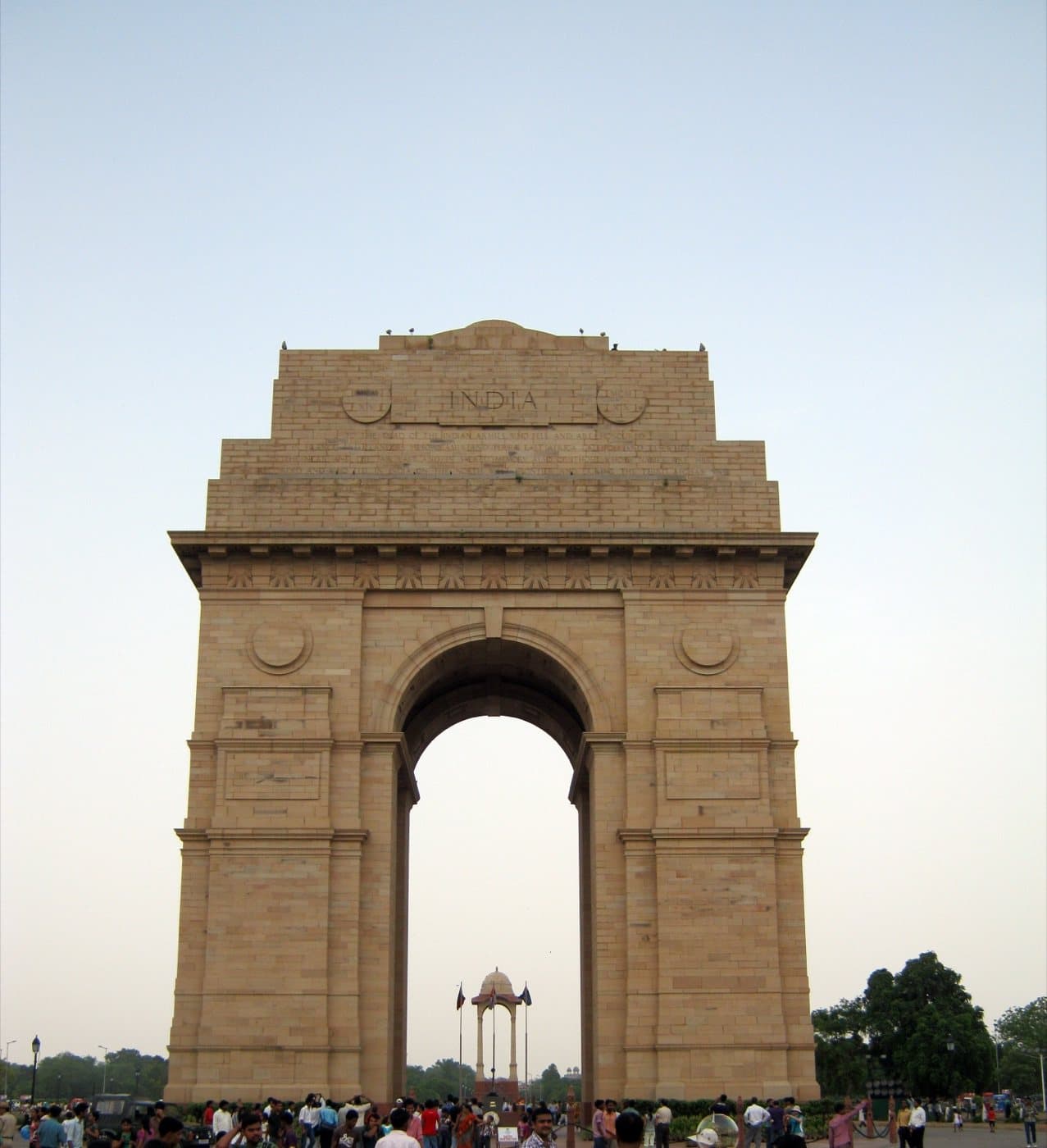
1 photo · Subeesh Balan സുഭീഷ് ബാലൻ · CC BY-SA 3.0 · Photos are representative and may not show current conditions. Context photograph — India Gate in New Delhi. Archival city context photograph. City context, not a photograph of National Gandhi Museum.. Credits →
Desk research, not a site visit. Re-check the official notice on the morning you travel.
The National Gandhi Museum opposite Raj Ghat makes Gandhi’s life tangible through spinning wheels, photographs, personal objects and the history of the freedom movement. A family can follow the story of cloth, a walking stick or a changing life in photographs rather than read every panel. The Martyrdom Gallery contains sensitive assassination-related material, so parents should choose that part deliberately.
Objects and photographs can engage younger children with an adult’s explanation. Parents should preview the assassination-related gallery before deciding whether to enter with a sensitive child.
There is enough material for a serious history visit, but a family can build a gentler route around making cloth, walking and everyday belongings.
Clothing provides a direct connection to the spinning wheels. Once children understand the practical work, the wider story of choices and political protest becomes easier to discuss.
The museum openly identifies sensitive objects in its final-life displays. Give children a choice about entering rather than making completion of every gallery the measure of a successful visit.
A few images can support a thoughtful conversation about evidence. Separate what is visible from what a caption explains, helping older children engage critically rather than memorise a timeline.
The spinning-wheel gallery gives children a concrete way into a large political story. Before discussing independence, ask where the cloth in their clothes comes from and how thread becomes fabric. The museum displays different forms of charkha and related spinning materials. Looking at a familiar need—clothing—helps explain why making and buying cloth could become part of a public movement. This is more approachable than beginning with a list of dates. The objects are collection material, so do not assume that a working demonstration or hands-on spinning session is included.
The operator identifies traditional, portable peti and mechanised Ambar forms among the wheels. Children can look for the practical problem each design addresses: carrying the equipment, arranging its moving parts or producing thread differently. Ask which version they would choose to take on a journey and why. The point is not to declare one machine better in every situation, but to notice how design responds to use. Samples and photographs can help connect the machines with people’s work; read enough of the caption to distinguish an actual object from a later model.
The photographic gallery is arranged chronologically, beginning with childhood and continuing through Gandhi’s life. Rather than read every panel, pick a few images that show a change in place, clothing or activity. What can the child see directly, and what does the caption add? This introduces the difference between observation and interpretation. A photograph captures one moment, while the sequence provides context. Older children may enjoy asking who made an image and what it was intended to communicate, especially when public leadership and everyday life appear side by side.
The museum identifies a walking stick associated with the Salt March among its personal objects. A small object can make a national event feel human: people had to walk, rest, carry things and continue day after day. Ask how a long journey on foot differs from a short family walk. Other ordinary belongings, such as sandals and writing instruments, can support the same idea. Avoid implying that the collection is a set of magical relics; their value lies in provenance and the lives and events they help explain.
The museum explicitly lists blood-stained clothing, the watch worn at the assassination, photographs and newspaper material related to Gandhi’s death and cremation. This is not a surprise that every child needs to encounter without preparation. Give a simple explanation beforehand and allow a child to decline the room. Older children may find it a meaningful place to discuss violence, grief and public memory, but the conversation should follow their questions. Parents can choose to end with another gallery instead; a useful museum visit does not require completing every emotionally difficult display.
A documented school visit in April 2024 included a short documentary, which shows the museum’s educational use but does not establish today’s drop-in screening timetable. Older third-party pages publish film schedules and different opening hours. Use the current operator visit page for the basic day, and contact the museum if a film, guided activity or group visit is essential. Ask about the language and duration as well as availability. For families arriving independently, the collection itself should remain the main plan rather than an unconfirmed scheduled programme.
National Gandhi Museum: current visitor information · DPS R K Puram: documented April 2024 educational visit
Current operator information gives free admission, 10am–5pm opening Tuesday to Sunday and last entry at 4:30pm. It welcomes wheelchairs and baby strollers in the galleries, asks visitors to store larger items and permits still photography without flash under its guidance. Video and professional recording have separate restrictions. These are helpful provisions, although a particular access requirement is still worth discussing with staff. Take food breaks outside collection areas and ask about the nearest toilet on arrival. The office number is 011-23310168 for arrangements that cannot be settled from the published page.
The museum and Raj Ghat complement one another: one explains through objects and images, while the other offers a memorial landscape. They are separate places with different hours and rules, and crossing between them requires attention to the actual pedestrian route. If the child needs context, visit selected museum galleries first; if cooler outdoor conditions matter, consider the memorial first and the museum later. Gandhi Smriti is another institution elsewhere in Delhi, not an alternative entrance to this museum. Use the full destination name when booking transport to avoid that common confusion.
Prices, access and programmes can change. Confirm with the operator before setting out.
National Gandhi Museum and Library, opposite Raj Ghat, New Delhi 110002.
Search-based Google map. Confirm the public entrance before travelling; this is not a surveyed entrance pin.
Yes. The current operator visitor page states free admission and also lists free parking.
No. This museum is opposite Raj Ghat. Gandhi Smriti is a separate site associated with Gandhi’s last residence and assassination.
The spinning-wheel collection gives a concrete starting point through thread, cloth, tools and everyday work.
The published collection description does not establish a hands-on session. Use only equipment staff explicitly identify for visitor participation.
The Martyrdom Gallery includes blood-stained clothing and assassination-related material. Prepare children and allow them to skip it.
Older listings give schedules, and a 2024 school visit included a film, but a current drop-in timetable was not verified. Contact the museum.
The operator explicitly welcomes baby strollers and wheelchairs. Ask about any specific route or storage requirement on arrival.
The operator permits still photography without flash under its visitor guidance. Video and professional use need separate permission or specified access.
The current last admission is 4:30pm, with closing at 5pm. Arrive earlier for a meaningful gallery visit.
Choose according to weather and the child’s need for context. The museum explains objects and events; the memorial provides a quieter act of remembrance.
Your first-hand tip helps the next family: the best time to go, where the toilets are, what to skip. An editor reads every tip before it appears.
Desk-checked against linked primary sources on 2026-11-01; not a site visit. Ages, durations and suggested activities are editorial advice. Confirm date-specific access, prices and facilities before travel. Last checked 1 November 2026.
Tell us what has changed: new hours, a price, a closed gallery, a changing table that exists or doesn’t. We check against a source before publishing.
Run National Gandhi Museum? Claim this listing to take enquiries and send us updates. It’s free.
Consider one of these if there is time and energy left. They are alternatives; the route link lets you check the journey before adding a stop.
30–60 minutes for the memorial and a short grounds walk. · Outdoor
Raj Ghat is the memorial at Gandhi’s cremation site, centred on a simple dark stone platform, an eternal flame and a quiet landscaped setting. Check its own opening and access notes before adding a second stop.