Use the correct sightseeing window
Nationality-based visitor hours and prayer access are not the same schedule. Leave flexibility around arrival so a temporary pause does not turn into pressure on children or staff.
Jama Masjid combines a monumental red-sandstone approach, a broad courtyard and a working place of Muslim worship.
Current Delhi Tourism tariff and nationality-based visiting windows differ from older guides. Prayer pauses, child concessions and optional tower access require confirmation at the mosque.
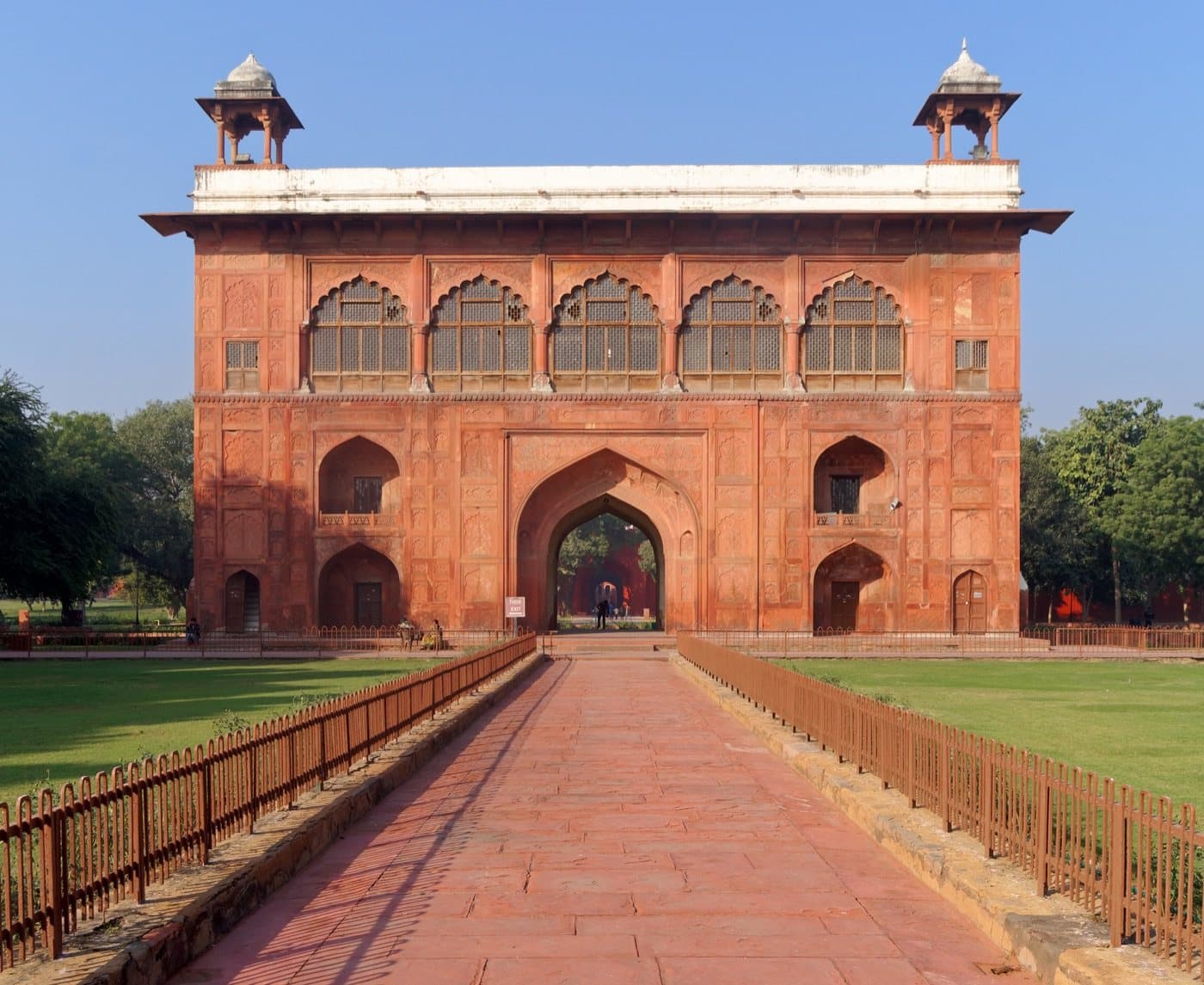
1 photo · Jakub Hałun · CC BY-SA 4.0 · Photos are representative and may not show current conditions. Context photograph — 20191203 Naubat Khana, Red Fort, Delhi 0453 6340 DxO. Archival photograph; current access and conditions may differ. Neighbourhood context, not a photograph of Jama Masjid (Old Delhi).. Credits →
Desk research, not a site visit. Re-check the official notice on the morning you travel.
Jama Masjid combines a monumental red-sandstone approach, a broad courtyard and a working place of Muslim worship. A family visit can focus on symmetry, the contrast between stone colours and the way a prayer space is organised. Enter as respectful visitors, leave room for worshippers and treat nearby food lanes as a separate outing.
Young children can enjoy the large shapes and courtyard, but adults must manage footwear, hot stone and quiet behaviour. A minaret climb is not needed for a satisfying visit.
The most important family decision is whether everyone is comfortable with a quiet, shoe-free visit that may pause around prayer.
Nationality-based visitor hours and prayer access are not the same schedule. Leave flexibility around arrival so a temporary pause does not turn into pressure on children or staff.
A family can appreciate the mosque without climbing a minaret. Treat the tower as a locally confirmed option rather than the reward that makes the whole outing worthwhile.
The mosque and food streets offer different experiences. Choosing one meal stop gives children a clear next step without requiring an exhausting tour of every celebrated Old Delhi outlet.
Begin outside by looking at the relationship between the elevated mosque and the streets below. The broad approach makes the building feel different from the dense lanes around it. Ask a child to find repeated shapes before introducing names: arches, domes, towers and bands of contrasting stone. This works even for visitors who know little about Mughal architecture. Shah Jahan commissioned the mosque in the seventeenth century; the useful connection for a family is that the nearby Red Fort and this congregational mosque belonged to the same capital, with very different purposes.
The official tourism account describes three gates and two tall minarets. Children can compare the sides of the prayer frontage and notice how white marble stands out against red sandstone. Rather than count every detail, choose one repeated feature and follow it with your eyes. Then look for a change in scale: a doorway seen from across the courtyard feels different when approached. These observations let a child understand design through looking, while keeping voices low and avoiding disruption to people praying.
Delhi Tourism: Jama Masjid visitor categories and hours · Incredible India: Jama Masjid architecture
The courtyard is not an unrestricted play square even when it appears open and spacious. Explain before entering that people come here for worship and that a visitor’s route should leave their movement and prayer undisturbed. The ablution area offers an opportunity to explain that preparation matters in religious practice; it is not a water-play feature. Families can pause at an appropriate edge to take in the architecture, but should follow staff directions about where visitors may stand, photograph or sit. A short, attentive visit is more valuable than treating every corner as a photo location.
The focused Delhi Tourism page gives different sightseeing opening times for Indian and foreign visitors, with sunset as the end of the tourist day. It separately describes dawn and evening access for devotees. This distinction matters: a prayer opening is not automatically a sightseeing appointment. Friday midday has an additional non-worshipper restriction in the tourism guidance. Because prayer takes priority, avoid building a tightly timed lunch or transfer around uninterrupted mosque entry. If the gate is temporarily closed to sightseeing, wait respectfully or change the order of the Old Delhi visit.
Delhi Tourism: Jama Masjid visitor categories and hours · Delhi Tourism: places of worship and visitor conduct
As checked on 24 October 2026, Delhi Tourism lists ₹400 for foreign visitors, free Indian entry and free photography. Older camera-fee tables circulating online should not silently replace this newer published information. The page does not establish a current child concession, robe-hire tariff or minaret price, so those remain separate questions. Two foreign adults would budget ₹800 for the published visitor charge before any optional costs; that arithmetic is not a quotation for a family with children. Ask what any requested payment covers before paying.
Visitors remove shoes and dress modestly. The tourism guidance mentions robes at the north gate, but no current hire amount was verified. Clothing that already suits a place of worship makes arrival easier than relying on rental availability. Carry footwear in the manner directed at the entrance and consider that exposed courtyard stone may be uncomfortable in strong sun. Keep bags small and hands available for younger children on the approach. No complete current step-free visitor route or accessible-toilet specification was verified, so contact the mosque before making access-dependent plans.
Incredible India describes views from the southern minaret, but that description does not establish today’s opening, charge, child eligibility or stair conditions. Confirm all of these locally before choosing a climb. Families who prefer to remain at courtyard level still see the building’s principal visual relationships and can discuss how towers mark a skyline. Do not promise a child the climb in advance. If only part of the family wants it, first establish a permitted meeting point and a practical supervision arrangement rather than splitting up casually in a busy worship complex.
The food district around Jama Masjid has a strong culinary identity, with Delhi Tourism highlighting grilled dishes and sweets. Those businesses have their own opening times; their evening trading does not extend sightseeing access to the mosque. Choose a seated meal or one snack according to the family’s appetite, checking ingredients and prices at the outlet. The tourism food page identifies Jama Masjid Metro on the Violet Line; check the current exit for your approach. Finish with the planned meal or return journey rather than assuming the mosque, Red Fort and every Chandni Chowk lane all fit into one child-paced session.
Prices, access and programmes can change. Confirm with the operator before setting out.
Jama Masjid, off Netaji Subhash Marg, Shahjahanabad / Old Delhi, New Delhi 110006.
Search-based Google map. Confirm the public entrance before travelling; this is not a surveyed entrance pin.
Delhi Tourism currently lists free Indian visitor entry and ₹400 for foreign visitors. The page does not specify current child concessions.
The focused tourism page gives 11am as the Indian visitor opening and 8am for foreign visitors. Prayer access is a separate arrangement; confirm at the mosque.
The current Delhi Tourism page lists photography as free. Follow local restrictions on photographing worshippers and confirm any separately requested charge.
Non-worshipper access is restricted around Friday midday prayers. Plan another part of Old Delhi then and follow the mosque’s instructions.
Visitors enter the worship precinct without shoes as directed. Prepare younger children for the change and watch the temperature of exposed stone.
Delhi Tourism mentions robe hire at the north gate, but availability and the current charge were not verified. Suitable clothing from home is simpler.
No current universal child or access rule was verified. Ask about opening, stairs, eligibility and the separate fee before deciding.
No. Tourist access ends at sunset in the current tourism guidance; nearby restaurants may trade later.
Compare red stone with white marble, find repeated arches and observe how the courtyard leads towards the prayer frontage, while respecting worshippers.
Your first-hand tip helps the next family: the best time to go, where the toilets are, what to skip. An editor reads every tip before it appears.
Desk-checked against linked primary sources on 2026-11-01; not a site visit. Ages, durations and suggested activities are editorial advice. Confirm date-specific access, prices and facilities before travel. Last checked 1 November 2026.
Tell us what has changed: new hours, a price, a closed gallery, a changing table that exists or doesn’t. We check against a source before publishing.
Run Jama Masjid (Old Delhi)? Claim this listing to take enquiries and send us updates. It’s free.
Consider one of these if there is time and energy left. They are alternatives; the route link lets you check the journey before adding a stop.
60–120 minutes for a short selected market route and one food stop. · Outdoor
Chandni Chowk is a working market district, not a single attraction with one gate. Check its own opening and access notes before adding a second stop.