Let the child choose books, jewellery or ingredients
Selecting one type of trade gives the walk a reason and a manageable direction. The family can notice details instead of repeatedly changing lanes to chase another recommendation.
Chandni Chowk is a working market district, not a single attraction with one gate.
Official market descriptions and locality records verified; shop schedules, food prices and optional transport are individually variable.
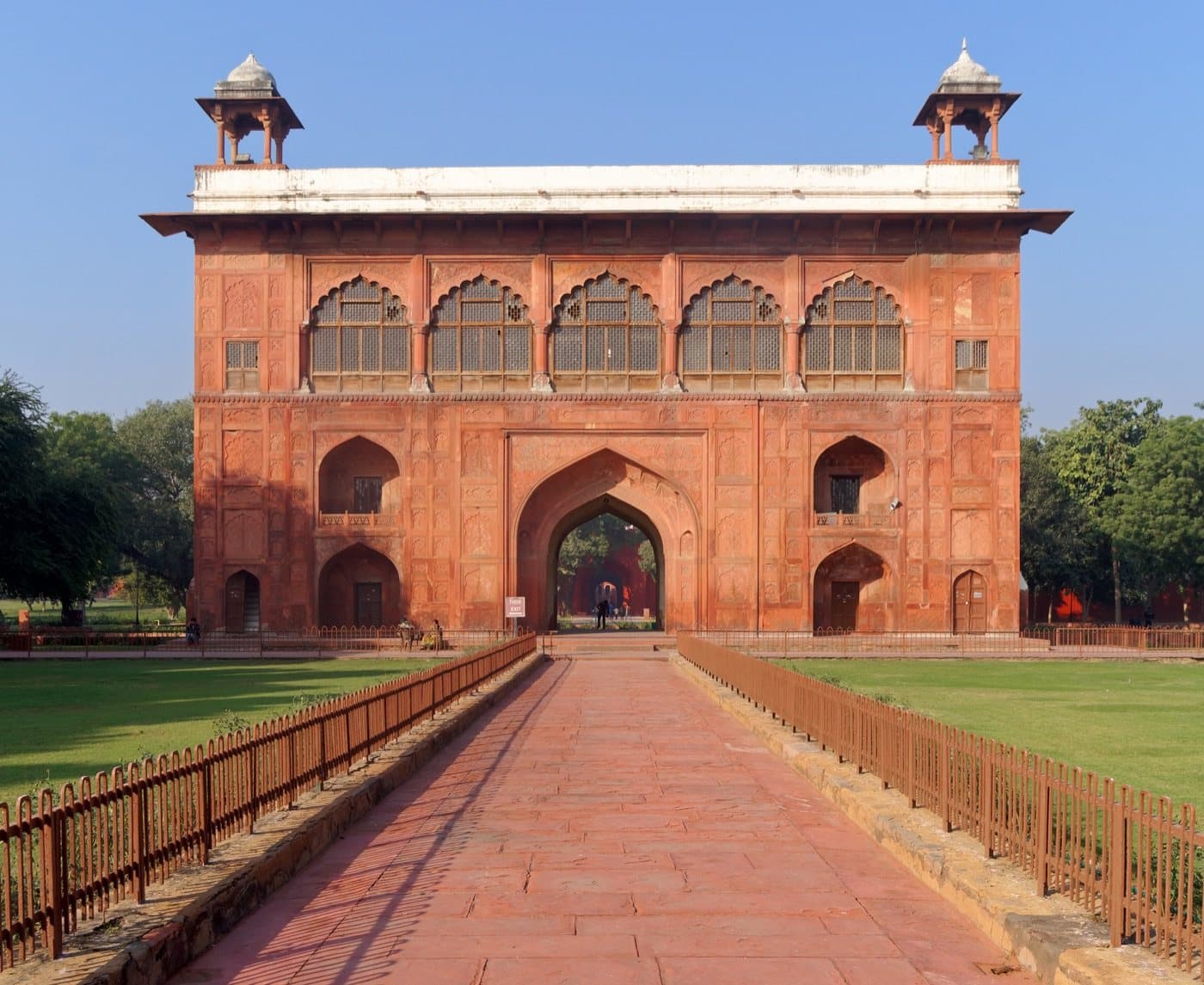
1 photo · Jakub Hałun · CC BY-SA 4.0 · Photos are representative and may not show current conditions. Context photograph — 20191203 Naubat Khana, Red Fort, Delhi 0453 6340 DxO. Archival photograph; current access and conditions may differ. Neighbourhood context, not a photograph of Chandni Chowk heritage and market walk.. Credits →
Desk research, not a site visit. Re-check the official notice on the morning you travel.
Chandni Chowk is a working market district, not a single attraction with one gate. A family walk can connect the broad historic street with a carefully chosen specialist lane: books and stationery at Nai Sarak, jewellery around Dariba Kalan or spices towards Khari Baoli. The best outing is selective—watch commerce, notice buildings and share one planned food stop rather than attempting every famous shop.
School-age children may enjoy specialised shops and food preparation. With toddlers, keep to a compact route and be prepared for crowded narrow lanes that can make a stroller awkward.
Children often remember a specific shop, ingredient or snack better than a long list of famous lanes. Choose the thread that interests your family.
Selecting one type of trade gives the walk a reason and a manageable direction. The family can notice details instead of repeatedly changing lanes to chase another recommendation.
Confirm a suitable place and menu early, especially with dietary needs. A crowded lane is a difficult place to negotiate an unfamiliar meal after a child is already tired.
Choose a route that finishes near a known transport point. Reaching the most distant famous shop is less useful than avoiding a long retrace through the same busy lanes.
Delhi Tourism places Chandni Chowk within seventeenth-century Shahjahanabad. Children can begin by looking at how a major street gathers many different activities: shops below, older façades above, people delivering goods and customers moving between lanes. Ask what a city needs besides a palace. This makes the market part of the Red Fort story without requiring another ticket or a long historical lecture. Pause in a place where the family is not blocking trade, and look upward as well as into shop windows; the street is both architecture and everyday work.
The official trade directory divides Chandni Chowk into numerous market sections, including the Dariba Kalan, Nai Sarak and Fatehpuri sides. That is a useful reminder that the district is not one interchangeable shopping strip. Choose a lane based on the child’s interest: jewellery and metalwork, books and stationery, or food ingredients. Look at how similar businesses cluster and discuss why a buyer might benefit from comparing nearby shops. A family does not need to enter every shop to understand the pattern. Ask permission before photographing a person or a detailed work process.
Delhi Tourism: Old Delhi specialist markets · Delhi Trade and Taxes: market-locality directory
Delhi Tourism describes Nai Sarak as a connection between Chandni Chowk and Chawri Bazaar with school and college books and stationery. For a child, this is an easy way to compare their familiar classroom objects with a wholesale trading environment. Notice stacks, labels, bundles and the way books are found in a crowded shop. If buying, bring a specific title, edition or stationery budget; a browsing walk is different from searching for a required textbook. The tourism account identifies Sunday closure for this market, so do not make it the essential stop on a Sunday outing.
The spice-market end of Old Delhi can make the journey from food ingredient to cooked meal visible. Children can compare shapes and colours in sacks or displays and ask how a spice might be used. Do not encourage touching stock or tasting without the seller’s permission. Strong smells, dust and loading activity may be uncomfortable for some children, so an edge-of-market look can be enough. A rooftop photograph or access inside a private commercial building is not an entitlement of a public-street walk. Keep the experience focused on respectful observation of a working market.
The government food guide highlights Paranthe Wali Gali and the broader market’s snacks. Use that as a lead, not a guarantee that every famous outlet will have suitable seating, current hygiene conditions or a dish your child likes. Decide on one planned stop and check the actual menu price before ordering. Ask about spice level and allergens directly; a familiar dish name does not establish ingredients. Sharing a modest order can leave room to try something else, but no family should feel obliged to complete a long tasting checklist to experience Old Delhi.
Official pages describe some outlets as closed on Sundays and specifically identify closure for certain specialist markets. The correct planning response is to check the businesses essential to the visit, not declare the entire public district inaccessible. A Sunday architecture walk and a weekday shopping trip can be different experiences. The general 10:30am–9pm tourism window is also not a promise that a particular seller works those hours. For children interested in watching active trade, choose a confirmed trading period rather than arriving very early simply to avoid all activity.
Delhi Tourism: Chandni Chowk food and visitor hours · Delhi Tourism: Old Delhi specialist markets
Delhi Tourism describes redevelopment of the main street with pedestrian and non-motorised movement space. That should not be read as a guarantee that every adjoining lane is wide, level or free of moving carts and cycles. Keep younger children beside an adult, agree a meeting point and stop before making a sudden change of direction. If using a rickshaw, agree the destination, fare and whether waiting is included before boarding; no universal current family fare was verified. A compact walking route can be simpler than a loosely defined sightseeing ride.
The official visitor page identifies Chandni Chowk Metro on the Yellow Line. Choose the start and finish together, allowing for the actual station exit and the lane you want to visit. Locate a dependable toilet or seated break early rather than assuming every food stall has one. Religious buildings nearby have their own dress, prayer and access rules; entering them is a separate decision, not a casual shortcut. End the walk after the chosen lane and food stop if children are satisfied. The district’s richness is a reason to return, not a reason to exhaust every possibility today.
Prices, access and programmes can change. Confirm with the operator before setting out.
Chandni Chowk main street and selected adjoining market lanes, Shahjahanabad / Old Delhi, New Delhi 110006.
Search-based Google map. Confirm the public entrance before travelling; this is not a surveyed entrance pin.
No admission ticket is required for the public street. Guides, purchases, rickshaws and separate attractions are additional choices.
No single rule describes the whole district. Some shops and specialist markets close, while the street and other businesses remain usable; verify your essential stops.
Nai Sarak is the official tourism-listed books and stationery market, but its Sunday closure should be considered.
Not necessarily. The main street improvements do not guarantee spacious surfaces in all narrow commercial lanes; keep the route compact.
It is a working market. Observe displays and ask before touching or tasting goods; no demonstration is automatically included.
Inclusions depend on the specific operator product. Do not treat any advertised walk as an unlimited tasting or all-attractions pass.
No public entitlement was verified. Rooftops and commercial interiors require permission and a suitable authorised route.
No universal current fare was established. Agree the exact route, waiting and total price before boarding.
Chandni Chowk on the Yellow Line. Check the current exit and walking route for the selected market section.
Choose one specialist lane, one food stop and a clear return point; add a monument only if it was separately planned.
Your first-hand tip helps the next family: the best time to go, where the toilets are, what to skip. An editor reads every tip before it appears.
Desk-checked against linked primary sources on 2026-11-01; not a site visit. Ages, durations and suggested activities are editorial advice. Confirm date-specific access, prices and facilities before travel. Last checked 1 November 2026.
Tell us what has changed: new hours, a price, a closed gallery, a changing table that exists or doesn’t. We check against a source before publishing.
Run Chandni Chowk heritage and market walk? Claim this listing to take enquiries and send us updates. It’s free.
Consider one of these if there is time and energy left. They are alternatives; the route link lets you check the journey before adding a stop.
45–75 minutes for the main mosque · Indoor & outdoor
Jama Masjid combines a monumental red-sandstone approach, a broad courtyard and a working place of Muslim worship. Check its own opening and access notes before adding a second stop.