Keep a ground-level version of the plan
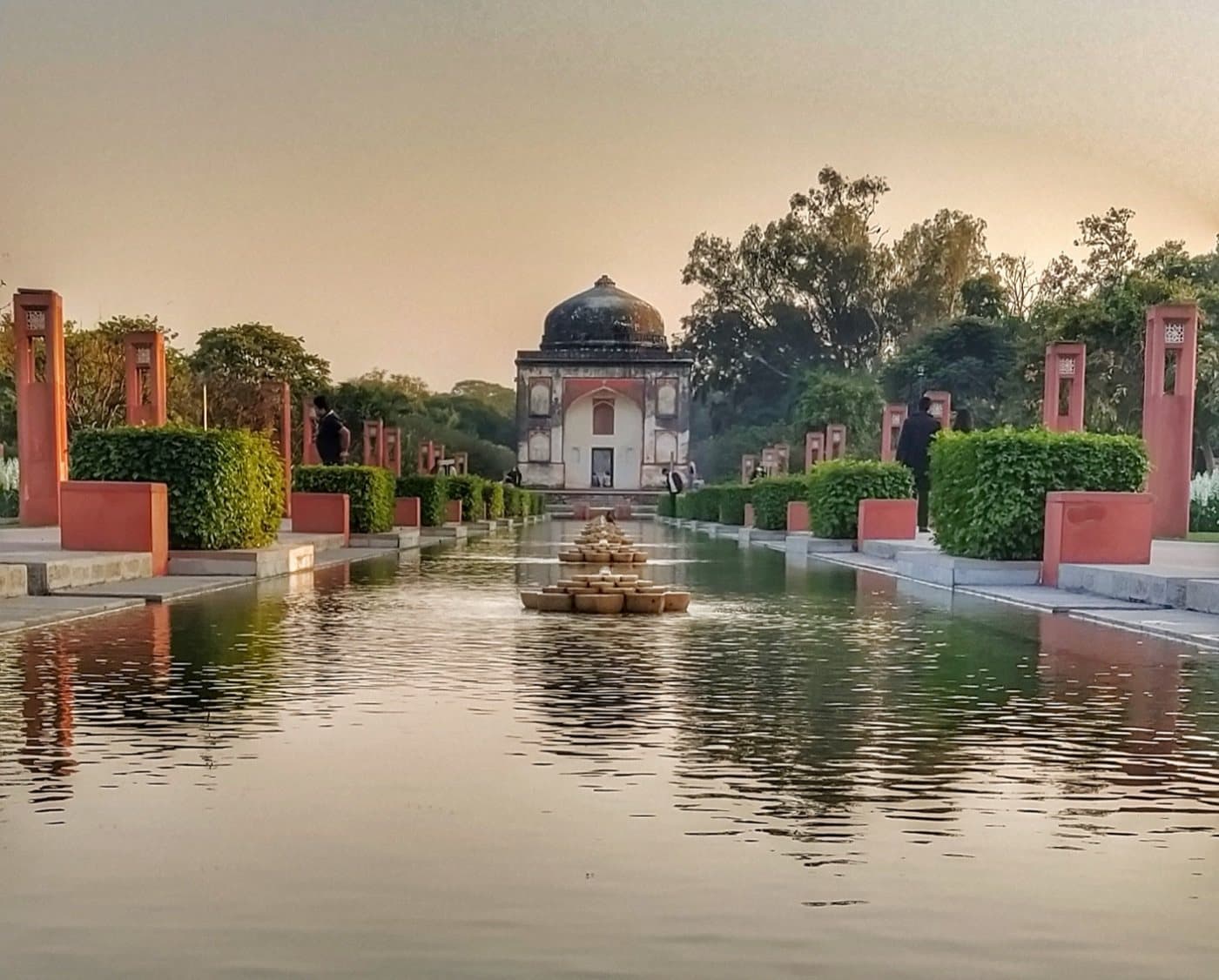
The view across the garden explains much of the architecture. A family that cannot comfortably manage the main platform can still have a purposeful visit without treating stairs as compulsory.
Humayun’s Tomb is a garden-tomb experience built around the approach, symmetrical landscape and monumental red-and-white mausoleum.
Daytime site remains listed open; tariff channels differ and September 2026 amenity works may affect facilities.
1 photo · Naveen R Gowda · CC BY-SA 4.0 · Photos are representative and may not show current conditions. Credits →
Desk research, not a site visit. Re-check the official notice on the morning you travel.
Humayun’s Tomb is a garden-tomb experience built around the approach, symmetrical landscape and monumental red-and-white mausoleum. A family route can include one smaller tomb and the main building without turning the visit into a tour of every enclosure.
All ages for a selected route; steps and exposed paths require planning
Use the garden approach as part of the visit, and decide on steps and extra sites before buying a broader package.
The view across the garden explains much of the architecture. A family that cannot comfortably manage the main platform can still have a purposeful visit without treating stairs as compulsory.
Isa Khan and Humayun provide a clear change in form and scale. That comparison can be more memorable than a long list of subsidiary structures after attention has faded.
Do not rush straight to the dome. From the approach, the paths and water-channel layout show how the tomb is placed within a formal garden. Ask the child to find repeated shapes and compare the view from nearer and farther away. The arrangement is part of the monument, not merely empty space between the ticket gate and the building. Use permitted paths and keep children clear of channels and edges.
Delhi Tourism Humayun’s Tomb main visitor page · Ministry of Culture heritage description
The contrast of red stone and pale details makes the building legible even to a young visitor. Look at arches, the large dome and smaller rooftop forms from a comfortable viewing point. If the current route permits entry to the chamber, explain that this is a tomb and keep behaviour respectful. Do not assume every platform or interior has a step-free approach. A ground-level architectural view remains worthwhile when stairs do not suit the family.
The district authority identifies the earlier Isa Khan complex among the subsidiary monuments on the approach. An older child can compare its scale and shape with Humayun’s main tomb. This is more productive than adding every side path simply because it is on a map. Check which areas are open, and allow a shorter route for younger visitors. Labels should guide the historical explanation rather than treating every structure as part of the same building campaign.
The four-part garden is integral to the monument rather than empty space surrounding it. UNESCO describes connected pools and water channels as part of its design. Stand at a permitted path junction and ask the child how the routes divide the landscape. Then look back towards the building: does the view feel centred, balanced or different from a side path? The family is reading a plan with their feet rather than learning a definition from a textbook.
Keep the observation short and do not require the child to walk every quarter. Channels can be understood without stepping into them, and a dry section does not make the historic design meaningless. If the separately ticketed museum is part of the day, remember this view so a model indoors can be compared with the real landscape. That link gives both visits a clear purpose.
From the garden, look at the relationship between the high dome, the broad platform and the repeated arched openings. Move only to a permitted closer viewpoint to compare one small detail with that overall silhouette. UNESCO describes a double dome and an octagonal interior arrangement, but children do not need to enter every chamber to appreciate the design. An architectural model in the separate museum can explain features that are difficult to see from outside.
Choose one comparison: a large arch and a smaller opening, red stone and pale marble, or the straight line of a path and the curved outline of the dome. Ask the child which element draws their eye first and why. A brief sketch after the visit is a useful way to remember those shapes. Keep hands off carved or screened surfaces and leave narrow viewing spaces clear for other visitors.
The monument’s survival depends on research, material choices and skilled workmanship. UNESCO’s conservation account describes the replacement of inappropriate modern materials with compatible traditional approaches, including lime-based work. This offers older children a different question from who built the tomb: how can people repair a historic building without making it into an entirely new one? Look only from public areas and do not approach a working zone to investigate.
A repaired surface may appear different from a weathered one, but guessing at its age from colour alone can be misleading. Use the interpretation or the conservation displays in the museum to test that first impression. This conversation also explains why barriers and temporary routes exist. They protect visitors and the structure, while allowing much of the wider garden-tomb experience to continue.
The two Delhi Tourism pages retain ₹40/₹600 and ₹35/₹550 references, consistent with channel differences but requiring confirmation at checkout. Select the correct nationality and child category. The neighbouring site museum and Sunder Nursery have their own fees and concessions. A combined product can be useful only when it explicitly names all intended sites. Do not assume that a ticket bought in a shared arrival area includes every nearby entrance.
Delhi Tourism Humayun’s Tomb main visitor page · Delhi Tourism alternate tariff page · Humayun’s Tomb Museum admissions
Recent PTI reporting describes public-amenity upgrades at Humayun’s Tomb. It does not say the entire campus is closed. Nevertheless, a toilet, route or service described in an older guide may be affected. Ask about the practical facilities needed for the family and follow current diversions. Keep the visit flexible rather than promising uninterrupted access to every path. The related museum can explain conservation, but its opening days differ from the tomb.
PTI/Times of India: partial monument repairs, 12 September 2026
Choose daylight for a first visit so the child can see the garden layout and footing clearly. Current weather and outdoor conditions should shape the starting time. Plan the final journey from the selected metro station or vehicle drop-off rather than assuming the tomb is immediately at an exit. Carry permitted essentials and arrange food separately. After the main tomb and one comparison stop, decide whether the child has enough attention for the museum; a second large garden is optional.
Delhi Tourism Humayun’s Tomb main visitor page · Ministry of Culture heritage description
Prices, access and programmes can change. Confirm with the operator before setting out.
Humayun’s Tomb complex, Nizamuddin East, Mathura Road, New Delhi
Search-based Google map. Confirm the public entrance before travelling; this is not a surveyed entrance pin.
Not automatically. Buy a product explicitly naming the museum if it is wanted.
Different official tourism pages retain different channel references; verify the live selected ticket.
No full closure was established; September reporting describes amenity upgrades.
No. Confirm the actual accessible route and use a ground-level view if steps do not suit the family.
Isa Khan’s enclosure, subject to current access.
No. The tomb is described as open daily; the museum has separate hours.
Confirm a current night-view product and route first; this guide’s core visit is daylight.
No. The garden approach, main tomb and one smaller comparison can be enough.
Your first-hand tip helps the next family: the best time to go, where the toilets are, what to skip. An editor reads every tip before it appears.
Desk-checked against linked primary sources on 2026-11-01; not a site visit. Ages, durations and suggested activities are editorial advice. Confirm date-specific access, prices and facilities before travel. Last checked 1 November 2026.
Tell us what has changed: new hours, a price, a closed gallery, a changing table that exists or doesn’t. We check against a source before publishing.
Run Humayun's Tomb? Claim this listing to take enquiries and send us updates. It’s free.
Consider one of these if there is time and energy left. They are alternatives; the route link lets you check the journey before adding a stop.
60–120 minutes · Indoor
Humayun’s Tomb World Heritage Site Museum explains the buildings, craftsmanship and cultural history of the Nizamuddin area beneath the shared heritage arrival landscape. Check its own opening and access notes before adding a second stop.
60–90 minutes · Outdoor
Waste to Wonder Park uses scrap metal to reinterpret seven well-known world landmarks in a compact outdoor photo-and-observation circuit. Check its own opening and access notes before adding a second stop.