Arrive around the demonstration break
A rushed arrival just before lunch can miss the process your child came to see. Plan the galleries and demonstration together, with Friday’s longer pause in mind.
Anokhi Museum makes hand-printed textiles understandable through cloth, tools and the work of block printers and a block carver in a restored Amer haveli.
Operator confirms museum and demonstrations. Ticket figures are indicative; formal workshop page retains an old suspension notice, so no workshop is promised.
1 photo · Ketayun, Katz · CC BY-SA 4.0 · Photos are representative and may not show current conditions. Credits →
Desk research, not a site visit. Re-check the official notice on the morning you travel.
Anokhi Museum makes hand-printed textiles understandable through cloth, tools and the work of block printers and a block carver in a restored Amer haveli. Children can watch how a repeated pattern is built rather than only seeing a finished garment. It is a small craft museum with scheduled demonstration pauses, not an all-day activity centre; a formal workshop should be confirmed separately.
Best from about 5+ for watching careful craft work. Stairs and demonstration tools require adult supervision.
Protect enough time for one artisan demonstration; that is often the clearest connection between the displayed cloth and the skill behind it.
A rushed arrival just before lunch can miss the process your child came to see. Plan the galleries and demonstration together, with Friday’s longer pause in mind.
Tell children they may watch real tools and fabric at work. A hands-on turn is a welcome possibility under staff guidance, not an entitlement attached to every ticket.
The kiosk is for drinks. A child waiting for lunch is unlikely to enjoy slow, precise printing, so make food timing part of the Amer route.
Begin with one textile and look for the repeated unit. Then look at the wooden block or related tool that helps explain how the shape reaches the fabric. Children can compare the finished pattern with the action needed to make it, rather than treating the museum as a shop full of attractive clothes. The operator describes textiles alongside tools, photographs and related objects; focus on a handful of relationships instead of trying to read every panel.
A demonstration makes precision visible. Ask children to notice where the next impression begins and how the artisan keeps successive shapes aligned. Wait until there is an appropriate pause before asking questions, and never reach for blocks or wet fabric without invitation. The museum describes opportunities to interact and try the craft, but the exact participation available depends on the artisan and operating conditions. Watching attentively is a worthwhile experience even when a hands-on turn is not available.
A carver’s work explains why a finished print begins well before ink or dye meets cloth. Children can notice how the raised and cut-away parts affect the eventual pattern. It is a careful process involving tools, not a play table: keep small hands away unless staff specifically invite participation. Seeing carving and printing together gives an older child a stronger understanding of craft skill than buying a souvenir alone.
The operator publishes demonstrations during opening hours with a pause around 1:30–2 pm on most operating days and 1–2:30 pm on Fridays. Its workshop page still displays an old suspension notice. Therefore do not book the family’s day around an assumed long workshop, take-home garment or guaranteed printing turn. Contact the museum if you want a specific group activity, age arrangement or teaching session. Arriving before a lunch pause is useful only if you leave enough time to watch properly.
Anokhi Museum: artisan demonstrations · Anokhi Museum: workshop notice
The current operator notice announces reopening on July 15, 2026 after summer maintenance. Its normal published closure is May 31–July 15, alongside Mondays and specified holidays. For autumn visitors the summer banner is historical context, not evidence that the museum remains closed. Tuesday–Saturday hours differ from Sunday. Check the actual holiday date when travelling around Diwali or another listed observance rather than assuming every tourist attraction runs daily.
The museum’s current public pages do not supply an admission table. Confirm the individual adult, student and child categories at the desk before calculating a family total. Staff tours may be available without an additional fee according to the operator FAQ; groups should contact the museum ahead. A regular craft demonstration does not establish a scheduled paid workshop.
Anokhi indicative ticket reference, July 2026 · Anokhi Museum: visitor FAQs
Use the museum’s full name and Kheri Gate address, and keep a photograph of the building available for the driver. The operator explicitly warns that visitors can be diverted to retail emporia. Its shop stocks museum-related products and is not identical to an ordinary Anokhi store. The haveli setting involves stairs; ask about the reachable ground-floor experience if a family member cannot climb, rather than assuming every gallery and demonstration is step-free.
Anokhi Museum: visitor FAQs · Anokhi indicative ticket reference, July 2026
The operator permits non-commercial phone and handheld-camera photography without flash; video cameras and tripods require advance permission. Ask before photographing an artisan closely or recording a demonstration. The kiosk offers drinks rather than a full lunch, so feed hungry children before arriving or plan a meal afterwards. A short Panna Meena viewpoint stop can complement the museum’s pattern theme, but the stepwell does not allow the same kind of hands-on participation as an invited craft demonstration.
Anokhi Museum: photography policy · Anokhi Museum: visitor FAQs
Prices, access and programmes can change. Confirm with the operator before setting out.
Anokhi Museum of Hand Printing, Kheri Gate, Amer, Jaipur
Search-based Google map. Confirm the public entrance before travelling; this is not a surveyed entrance pin.
The operator describes opportunities to interact and try the craft during demonstrations. Participation is subject to staff direction and the day’s operation; do not promise a particular garment or long workshop.
The operator lists about 1:30–2 pm on most operating days and 1–2:30 pm on Fridays. The museum is closed Monday, so a generic all-day demonstration claim does not override opening days.
The notice specifies reopening July 15, 2026. Treat that dated maintenance closure separately from current normal hours and confirm holiday exceptions.
No current operator family-ticket product or admission table is published. Ask the museum for the current individual categories rather than relying on older visitor estimates.
Ask the museum directly. Its workshop page retains an old suspension notice, so scheduled workshops cannot be assumed from the presence of regular demonstrations.
No. The museum occupies a restored haveli near Kheri Gate in Amer. Use that destination and a building photograph to avoid being taken to a textile emporium.
The operator allows non-commercial phone and handheld-camera photographs without flash. Video cameras and tripods need advance permission, and commercial use requires permission.
The operator FAQ describes a drinks kiosk, not a full meal service. Plan lunch elsewhere rather than arriving with hungry children expecting a café menu.
Discuss the exact reachable route with the museum before travelling. The haveli’s upper-level experience is not assumed accessible; ask about ground-floor access and the demonstration location.
Ordinary individual visits do not require an appointment in season. Staff tours are subject to availability, and the operator advises advance contact for groups.
Your first-hand tip helps the next family: the best time to go, where the toilets are, what to skip. An editor reads every tip before it appears.
Desk-checked against linked primary sources on 2026-11-01; not a site visit. Ages, durations and suggested activities are editorial advice. Confirm date-specific access, prices and facilities before travel. Last checked 1 November 2026.
Tell us what has changed: new hours, a price, a closed gallery, a changing table that exists or doesn’t. We check against a source before publishing.
Run Anokhi Museum of Hand Printing? Claim this listing to take enquiries and send us updates. It’s free.
Consider one of these if there is time and energy left. They are alternatives; the route link lets you check the journey before adding a stop.
1.5–2 hours · Indoor & outdoor
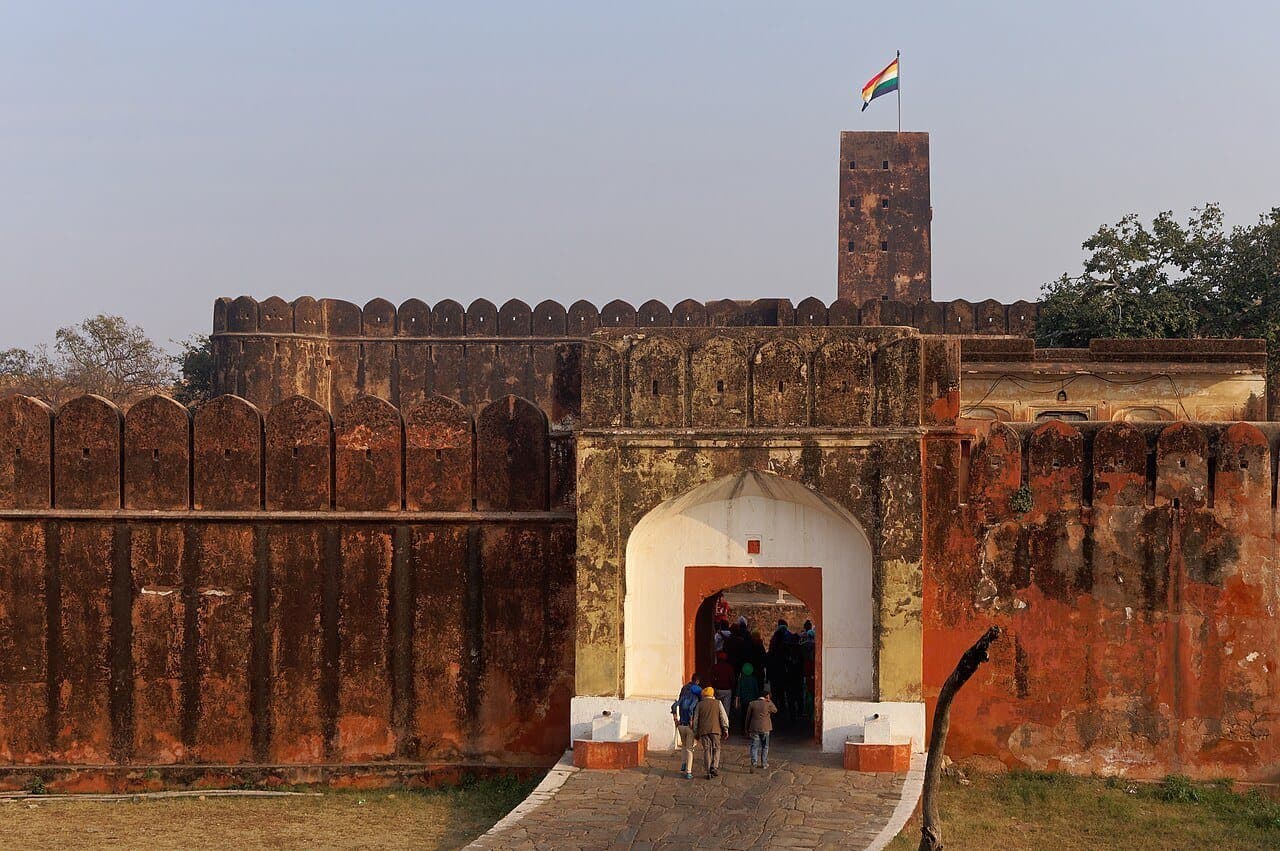
Jaigarh is the working-fort counterpart to Amer’s palace rooms: thick defences, cannon-making history, water storage and wide hill views give children practical problems to investigate. Check its own opening and access notes before adding a second stop.