Give children one pattern to remember
Ask each child to choose a carved pattern and describe it later. This makes close looking rewarding without encouraging touching or turning the visit into a long history lesson.
Sarkhej Roza combines a mosque, tombs, royal buildings and a large historic tank in one stone-built landscape southwest of central Ahmedabad.
The site publishes visitor hours and contact details. It remains a living religious complex, so tourist access to particular spaces can change during worship.
1 photo · Ajaysolanki29 · CC BY-SA 4.0 · Photos are representative and may not show current conditions. Credits →
Desk research, not a site visit. Re-check the official notice on the morning you travel.
Sarkhej Roza combines a mosque, tombs, royal buildings and a large historic tank in one stone-built landscape southwest of central Ahmedabad. Families can trace how light passes through carved screens and how buildings relate to water and open space. It is an active sacred place as well as an architectural monument, so a calm, daylight visit works better than treating it as a picnic ground or climbing destination.
No child age restriction was established. School-age children may enjoy the stonework and water-system story; younger children need close supervision around steps and tank edges.
The setting invites exploration, but the tank edges and living worship spaces call for a clear family plan. Choose a small number of features and leave room for quiet observation.
Ask each child to choose a carved pattern and describe it later. This makes close looking rewarding without encouraging touching or turning the visit into a long history lesson.
Explain that steps towards the water are not a climbing challenge. Choose a permitted viewpoint together so the child understands where the observation activity will happen.
Sarkhej sits outside the compact old-city circuit. A planned pickup helps you finish when the children are ready instead of adding an uncertain transport search.
Sarkhej Roza is more than one building. The mosque, tombs and royal remains are arranged around open space and the historic tank. Begin by looking at that relationship from a permitted viewpoint: which parts are sheltered, which face the water, and how does one move between them? A child can understand this layout before remembering any ruler’s name.
The district describes an architectural meeting of Islamic traditions with regional craftsmanship. Rather than giving a lecture about styles, invite children to compare a carved screen with a plain wall or a columned space with an open courtyard. The contrast makes the workmanship easier to appreciate.
Gujarat Tourism: Sarkhej Roza · Ahmedabad district: Sarkhej Roza
The complex centres on Ahmed Khattu Ganj Baksh, associated with Ahmedabad’s founder Ahmed Shah. Later royal additions, including those connected with Mahmud Begada, expanded the site. For a child, the useful idea is that a revered person’s resting place became part of a much larger religious and royal landscape over time.
Keep the tomb visit respectful and brief if children are restless. Explain before entering that people may be praying, remembering someone or making an offering. You do not need to follow every ritual to observe quietly, and a tourist photograph should never take priority over someone’s worship.
Pierced stone screens offer a good close-looking activity. From a permitted distance, find a repeated shape and see how it changes the light behind it. Ask a child to draw the pattern later from memory rather than touching the screen or pushing a camera into an opening.
The experience changes with the sun’s position, so no particular photograph or shadow pattern is guaranteed. A family interested in architecture can spend extra time comparing columns and sheltered edges. A younger child may be happy finding just one pattern and one contrast between shade and open sky.
Ahmedabad district: Sarkhej Roza · Gujarat Tourism: archaeological sites brochure
The large tank gives the complex much of its spatial character. Its water level and appearance vary, so do not promise a full reflective lake based on a photograph. A useful question is why important buildings might be grouped around stored water and what changes when that water is low.
Stay on permitted paths and keep children away from unguarded drops or steps towards the tank. Historic geometry can be interesting from a safe position; it does not require exploring every stair. Do not assume boating, swimming or an organised water activity is part of the visit.
Gujarat Tourism: Sarkhej Roza · Gujarat Tourism: archaeological sites brochure
Gujarat Tourism identifies ordinary entry as free. Two adults and two children can therefore budget ₹0 for admission, while travel and any separately arranged guide remain additional. An offering should be a personal choice, not confused with an official tourist ticket.
If someone offers guiding or another service, agree on the scope and price before accepting. A family that mainly wants to look at the courtyard and screens can make a worthwhile self-guided visit. Do not purchase an unverified package on the assumption that ordinary access requires it.
The Sarkhej Roza website publishes 09:00–18:00 daily and a contact number, +91 7016665203. This is a more useful planning window than a tourism brochure’s much broader late hours. Ask about special religious gatherings or access needs before travelling, and avoid timing a sightseeing visit around prayer.
Use the Makarba complex as the destination. It is outside the compact old-city heritage cluster, so do not attach it to Manek Chowk as a casual walking extension. Agree on the return ride, especially with grandparents or young children, and allow a separate transfer if combining it with Vechaar in the Vasna area.
Wear respectful clothing and carry a scarf if needed for a particular prayer space. Follow instructions about shoes and access rather than assuming the whole complex has one identical rule. Ask before photographing people, religious activity or an interior; no unrestricted photography or filming right is implied by free entry.
Bring water and arrange food outside worship areas. The reviewed sources do not establish baby-changing facilities, a visitor café or a fully wheelchair-accessible circuit. Historic thresholds and steps can limit the route, so a visitor with mobility needs should ask which areas can be reached comfortably before committing to the full visit.
Sarkhej Roza: visitor contact and hours · Ahmedabad district: Sarkhej Roza
Prices, access and programmes can change. Confirm with the operator before setting out.
Sarkhej Roza, Makarba, Post Jeevraj Park, Ahmedabad, Gujarat 380051
Search-based Google map. Confirm the public entrance before travelling; this is not a surveyed entrance pin.
It is a larger landscape of mosque, tombs, royal remains and a historic tank. Choose a few connected features rather than expecting one room with a single entrance and exit.
The site publishes 09:00–18:00 Monday–Sunday. Worship and special gatherings can affect individual spaces, so a daylight visit with local confirmation is the safest planning choice.
Gujarat Tourism describes ordinary entry as free. A guide, transport or voluntary offering is separate and should not be mistaken for a compulsory admission ticket.
Not necessarily. Water levels and conditions vary. The tank and surrounding architecture can still be observed without expecting the reflective water seen in some photographs.
Do not plan that as an activity. Keep children on permitted routes and away from unguarded edges, drops and any restricted stairways.
The complex welcomes heritage visitors, but it remains a living religious site. Dress respectfully, follow staff instructions and defer to prayer and any restricted areas.
It should be treated as a separate Makarba journey, not an extension of a short Manek Chowk heritage walk. Arrange transport and a clear return plan.
Choose one repeated shape and observe how it filters light. Sketch it later or describe it without touching the carving or leaning through openings.
Yes, with a vehicle transfer and timing check. Sarkhej is a daylight visit; Vechaar’s published opening begins in the late afternoon, and its museum ticket is separate from restaurant dining.
Your first-hand tip helps the next family: the best time to go, where the toilets are, what to skip. An editor reads every tip before it appears.
Desk-checked against linked primary sources on 2026-11-01; not a site visit. Ages, durations and suggested activities are editorial advice. Confirm date-specific access, prices and facilities before travel. Last checked 1 November 2026.
Tell us what has changed: new hours, a price, a closed gallery, a changing table that exists or doesn’t. We check against a source before publishing.
Run Sarkhej Roza? Claim this listing to take enquiries and send us updates. It’s free.
Consider one of these if there is time and energy left. They are alternatives; the route link lets you check the journey before adding a stop.
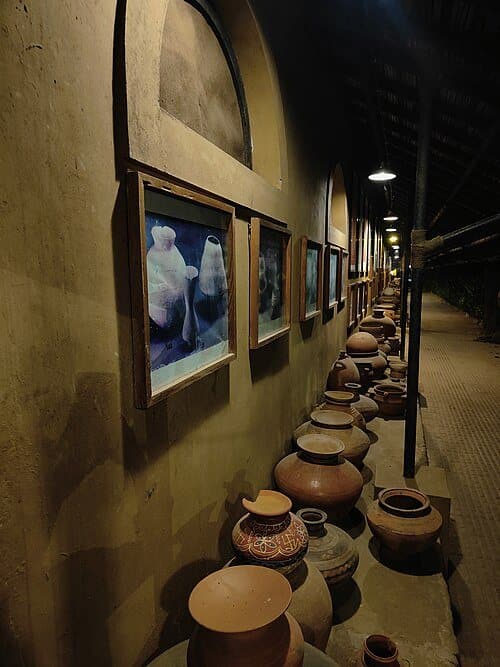
45–75 minutes for the museum · Indoor & outdoor
Vechaar turns familiar household objects into a surprisingly approachable museum: pots, storage vessels and serving pieces invite children to guess what people cooked, carried and shared before modern kitchens. Check its own opening and access notes before adding a second stop.