Choose a question before choosing the whole route
Ask children to look for different leaf shapes, signs of insects or contrasting textures. A small observation task can keep the visit engaging without turning it into a test or requiring every path.
Maharashtra Nature Park is an urban nature-learning visit in Dharavi, with trails that make more sense when children are encouraged to observe slowly.
1 photo · Dr. Raju Kasambe · CC BY-SA 4.0 · Photos are representative and may not show current conditions. Credits →
Desk research, not a site visit. Re-check the official notice on the morning you travel.
Maharashtra Nature Park is an urban nature-learning visit in Dharavi, with trails that make more sense when children are encouraged to observe slowly. The park’s own information describes a main route of about 1.8 km, a shorter middle trail, and a creekside/Ficus route. A family does not need to finish the longest path: ask which open route suits the day’s heat and your child’s walking ability. This is a place for noticing leaves, insects and bird behaviour, with wildlife sightings dependent on conditions. Its official public-holiday closure is particularly important when planning a school-break outing.
Best for curious school-age walkers; younger children can enjoy a shorter supervised loop. Uneven trail surfaces and the need for quiet observation may make a carrier easier than a stroller.
A nature visit can be rewarding without a guaranteed animal sighting or a long list of species. Give the child a few things to notice.
Ask children to look for different leaf shapes, signs of insects or contrasting textures. A small observation task can keep the visit engaging without turning it into a test or requiring every path.
A guided group session may have its own timing and requirements. Confirm what you have booked and what an ordinary visitor can actually access rather than assuming every educational activity is included.
Set the route around the youngest or least confident walker and keep water and rest needs visible. Another family’s duration or a school-group itinerary may not fit your child’s pace.
This is a nature-observation visit, not a safari or a large playground. Give children a small mission—spot two leaf shapes, listen for a bird and notice how the vegetation changes—then let the walk unfold slowly.
The park describes a roughly 1.8km main trail from the Education Centre towards the nursery, plus a roughly 400m middle trail through the butterfly garden, Nakshatra Van and rainwater-harvesting area. Choose according to energy and current access. The shorter route gives a young observer several different subjects without turning the outing into a distance target.
The educational butterfly garden includes plants used for nectar and caterpillar food. Our suggested game is to compare a chewed leaf with an intact one and discuss why the same plant can feed different stages of an insect’s life. Watch from the path; butterflies and caterpillars are living wildlife, so their presence changes with weather and season.
The educational sections include rainwater harvesting and a pond. Use this as a place to discuss where rain falling on a roof can go and why plants need stored water between wet periods. A child can sketch a roof, a pipe and a storage area afterward. Do not assume a live demonstration, water-play access or a maintained hands-on exhibit is included.
The park’s trail description includes scrub, woodland and creek-side views through Ficus roots. It notes seasonal migrant birds alongside resident waterbirds. A quiet pause is more useful than moving constantly; no individual species is guaranteed on a particular visit.
The official group programme has morning and afternoon sessions with interpretation before the trail. School, college and NGO groups need an interpreter and advance coordination. An individual family ticket is not an automatic place on a school programme.
The tariff differentiates individuals, foreign/NRI visitors, school groups, cameras and parking. A child arriving with family does not automatically receive the school-group concession. Confirm how the photography rule applies to your equipment before bringing a large camera kit.
Editorial pacing advice; allow for queues, weather and your family’s energy.
Prices, access and programmes can change. Confirm with the operator before setting out.
Maharashtra Nature Park, Dharavi, Mumbai 400017.
Search-based Google map. Confirm the public entrance before travelling; this is not a surveyed entrance pin.
The official timing page states it is closed on all public holidays. This can matter during school breaks: check your chosen date before arranging transport.
No. The park describes more than one trail, including a shorter middle route. Ask staff what is open and suitable, and choose an out-and-back or shorter route if your child tires easily.
The published concession applies when students visit as an eligible school group. A family visit should not assume that showing a school ID alone gives the group rate.
The park states that an interpreter is compulsory for school, college and NGO groups and asks for advance arrangements. Confirm the date with the office before making payment or organising a bus.
Do not promise flamingos or any specific species. This visit is about the park’s broader ecology; birds vary with season, water conditions and luck. Ask the interpreter what has been observed that day.
The official trail description includes brick-lined paths, which do not guarantee a smooth route. Ask about the shortest usable circuit and current wet sections; a carrier may be easier for a young child.
The official booking page says to confirm the date with the office before payment and describes payments as non-refundable. Secure the date and programme details before paying.
Choose one subject before entering: compare leaf edges, listen for calls or look for evidence of insects without touching them. Let the child record three observations; completing a trail is less important than noticing something carefully.
The official route connects the butterfly garden, Nakshatra Van, rainwater harvesting and a short woodland section. It offers several changes of subject without committing to the entire 1.8km main trail. Confirm its current condition before choosing it.
No guide inclusion is stated for individual admission. The ₹600 interpreter reference applies to a group of 30 students; ask the office about a family arrangement before paying.
Venue-specific desk research; prices and operating details are dated references, not a live availability guarantee.
Tell us what has changed: new hours, a price, a closed gallery, a changing table that exists or doesn’t. We check against a source before publishing.
Consider one of these if there is time and energy left. They are alternatives; the route link lets you check the journey before adding a stop.
45–90 minutes · Outdoor
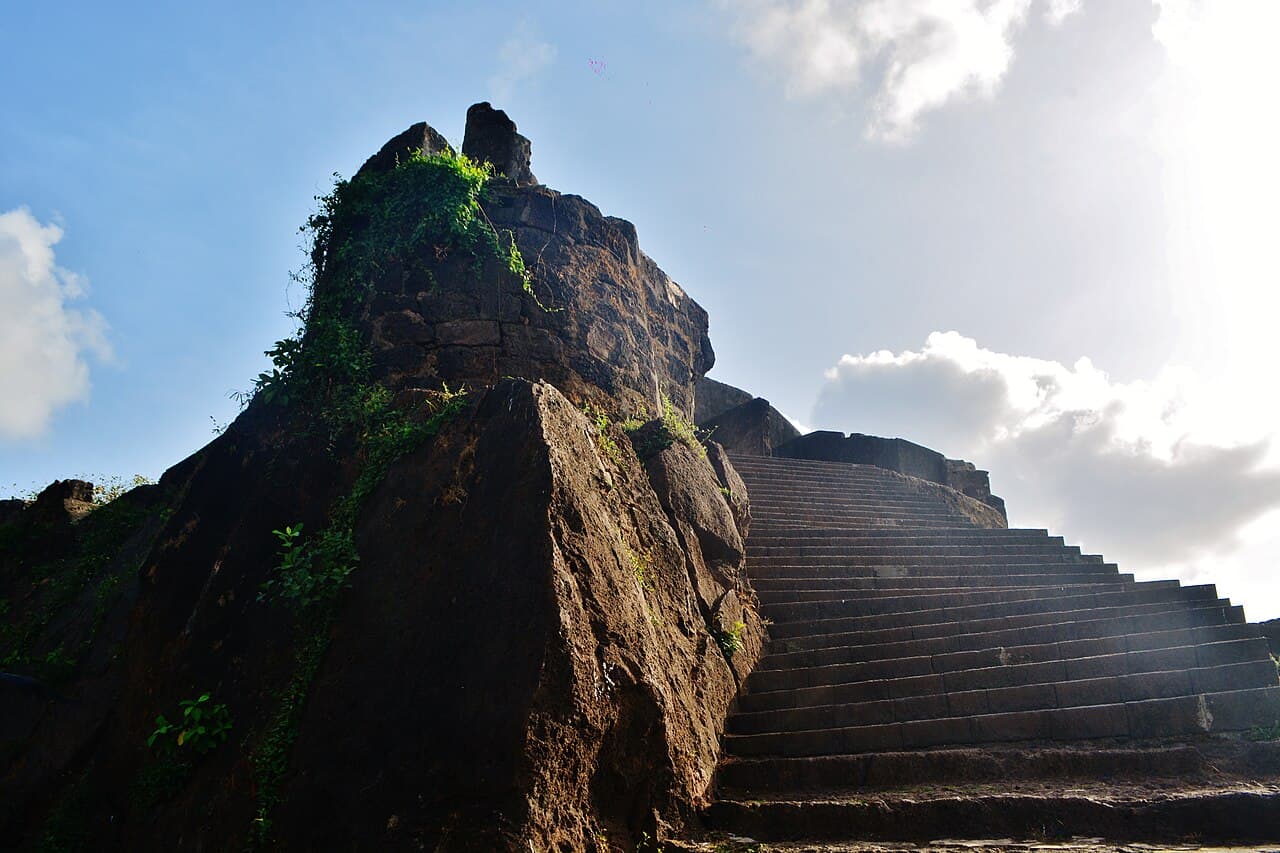
Sion Fort is a small hill-fort visit that can introduce children to Mumbai’s changing geography without requiring a full-day excursion. Check its own opening and access notes before adding a second stop.